2026 Trends in Custom Gemstone Rings: Colors, Cuts, and Settings
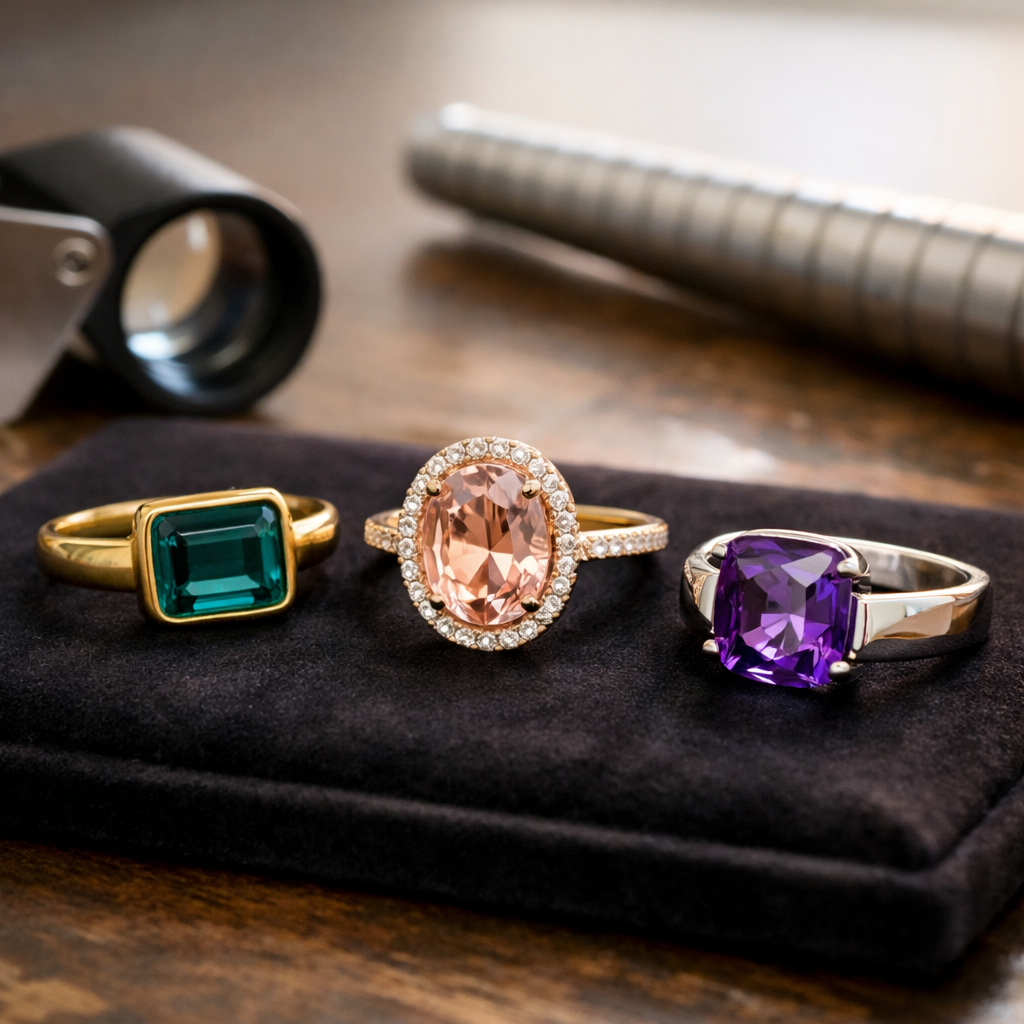
2026 Trends in Custom Gemstone Rings: Colors, Cuts, and Settings
Custom gemstone rings in 2026 are color-first, ethics-forward, and deeply personal. Shoppers are prioritizing expressive hues, elongated silhouettes that flatter the hand, and settings that protect stones without sacrificing style. Jewelry Guidebook distills the year’s biggest shifts—colors, cuts, and settings—into clear choices you can act on, with data-backed tips for durability, provenance, budgeting, and long-term care. Expect vibrant sapphires, aquamarines, tourmalines, and rare color-change alexandrite to anchor colored gemstone engagement rings, while modern bezels, mixed metals, and modular designs make customization easier and more secure. If you’re planning a custom ring, use the sections below as a roadmap from stone selection to CAD approval, final production, and aftercare.
The shift to color-first personalization
Color is the design driver of 2026. Sapphires in every shade, lagoon aquamarine, saturated tourmaline, and color-change alexandrite are leading picks for expressive, custom-first rings, with alexandrite coveted for its dramatic shift from green to red under different lights (as profiled by Christopher Duquet’s gemstone color report: https://christopherduquet.com/trending-gemstone-colors-market/). Jewelry Guidebook recommends starting with a target color family, then choosing cut and setting to support that hue.
“Personalization is the ultimate luxury in 2026, overtaking carat weight or rarity,” notes Lauredi’s engagement ring trends analysis (https://lauredi.com/en/blogs/the-journal/engagement-ring-trends-2026). That preference shows up in rising searches for birthstone and personalized gemstone jewelry reported in 2026 trend roundups (OneStepGems: https://onestepgems.com/blogs/news/gemstone-trends-2026-top-colors-cuts-jewelry-styles-to-watch?srsltid=AfmBOorHcSCSauNMnYDE3h4u-fjwPghqHLaxyhnhNdq17J80-9utFLNc).
Birthstone customization is the practice of selecting a gemstone tied to one’s birth month to add personal meaning to a ring. In 2026, buyers often pair birthstones with hand engraving, two‑tone metals, or family-sourced accent stones to create one‑of‑a‑kind, story-rich heirlooms.
Rarity and meaning in gemstone choice
Collectors are balancing symbolism, rarity, and performance. Sapphires and rubies deliver top hardness (Mohs 9), strong saturation, and longevity—excellent for daily-wear colored centers. Alexandrite offers rarity and color-change magic prized by connoisseurs, while tourmaline and aquamarine provide wide palettes at approachable prices. Jewelry Guidebook suggests weighing symbolism against hardness and wear profile before you commit.
Color-change gemstone: A color-change gemstone displays different body colors under varying light sources because of trace elements and crystal structure. Alexandrite is the classic example, appearing green in daylight and red in incandescent light. The dramatic shift is rare, collectible, and prized for jewelry that mirrors changing moods or stories.
Symbolism and durability at a glance:
| Gemstone | Common symbolism | Mohs hardness | Daily-wear notes |
|---|---|---|---|
| Sapphire | Loyalty, wisdom | 9.0 | Excellent durability; wide color range; ideal for bezel or prong. |
| Ruby | Passion, vitality | 9.0 | Excellent; vivid reds command premiums. |
| Emerald | Growth, renewal | 7.5–8.0 | Softer and brittle; avoid harsh cleaning; protective settings advised. |
| Tourmaline | Creativity, balance | 7.0–7.5 | Good with care; consider bezels/low profiles. |
| Alexandrite | Duality, transformation | 8.5 | Rare; secure settings recommended; strong collector interest. |
Cut revival and elongated silhouettes
Elongated shapes—oval, marquise, and “moval”—are the most in-demand for 2026 thanks to flattering, finger-lengthening optics highlighted in Lauredi’s trend review. Ask your jeweler for side‑by‑side visuals of oval vs. marquise vs. elongated cushion at the same carat to compare face‑up spread.
Shopping tips:
- Check symmetry and centered culets; misalignment shows more in elongated shapes.
- Minimize the “bow‑tie” shadow in ovals/marquise; review videos under multiple lights.
- Target length‑to‑width ratios: ovals often look elegant around 1.35–1.45; marquise 1.8–2.2; elongated cushions 1.15–1.25 for balanced finger coverage.
Antique and step cuts with modern polish
Antique cuts—Asscher, Old European, Old Mine, and rose cuts—are resurging, valued for hand-cut charm and broad flashes, with many Old Mine/Old European stones returning via upcycled sources and recycled metals (Valerie Madison’s sustainable trends: https://www.valeriemadison.com/blogs/studio-blog/top-sustainable-engagement-ring-trends?srsltid=AfmBOor816PeRUYRAfxHatodPalOdPM3ZjVWYCLI8BrpxNOOvTMuNQG4).
Clean step cuts (emerald, Asscher, baguette) are also in high demand for timeless appeal and hall‑of‑mirrors light return noted in 2026 roundups. Modernize heritage shapes with low profiles, ultra‑precise bezels, or mixed metals for everyday ease.
Settings as wearable sculpture
Sculptural rings with bolder bands and architectural elements are redefining how a ring wears on the hand, echoing 2026’s “wearable art” direction spotlighted by Lauredi. Consider mixed metals or east–west orientations to create unexpected silhouettes while staying practical. Jewelry Guidebook prioritizes comfort and stone security when pushing bolder silhouettes.
Settings comparison—comfort and protection:
- Bezel: Full metal rim protects edges; low snag risk; slightly reduces perceived stone size.
- Half‑bezel: Open sides brighten the stone; good protection with lighter look.
- Collet: Traditional wrapped seat; vintage feel; secure for antique cuts.
- Cathedral: Swept shoulders add height and presence; may snag if very tall.
- Split shank: Visual balance for larger centers; can trap debris; check comfort.
- Thick “saddle” band: Ultra‑comfortable, sculptural; adds weight; size precisely.
Industry notes indicate bezels and half‑bezels are gaining popularity for protection and modern lines (Rustic & Main’s 2026 guide: https://rusticandmain.com/blogs/journal/rustic-mains-guide-2026-engagement-ring-trends).
Asymmetry and Toi et Moi interpretations
The Toi et Moi—two stones in dialogue—anchors 2026’s asymmetric wave, celebrated as an iconic format for individuality in Lauredi’s report. Balance is the secret: contrast while keeping visual harmony.
Pairing ideas:
- Contrast hue: royal blue sapphire + peach morganite.
- Contrast cut: pear + emerald step cut.
- Contrast size: 1.00 ct + 0.50 ct for dynamic tension.
Mini checklist:
- Ensure shank counterbalance so the ring sits upright.
- Keep snag risk low with rounded profiles.
- Match table heights for a cohesive top view.
- Mix prong and bezel for both airiness and security.
Practical durability for active wear
For everyday rings, Jewelry Guidebook recommends gemstones Mohs 7+ to resist abrasion; softer stones demand careful handling and less frequent wear (2026 trend guidance from Oveela: https://oveela.com/blogs/news/trendy-gemstone-rings-in-2026-styles-colors-and-designs-you%E2%80%99ll-love?srsltid=AfmBOooQjM2TpJNWG-Kt11RcGgXC041qEo011FfsnPcsH0n7d89OD8Bk).
Bezel and low‑profile settings are ideal for active lifestyles, reducing snagging and repair frequency, a point echoed in contemporary engagement ring trend briefings (Jeffrey White: https://www.jeffreywhite.com/post/engagement-ring-trends).
Mohs hardness scale: A 1–10 ranking of scratch resistance for minerals. Diamond is 10; sapphire and ruby are 9; quartz is 7. For daily wear, prioritize stones rated 7 or higher to minimize fine facet wear and surface abrasion over time.
Ethics, provenance, and sustainable metals
Ethical, traceable gemstones now underpin buyer trust. Jewelry Guidebook encourages you to ask for origin documentation, mine‑to‑market narratives, and recycled content in metals; sustainable luxury that includes responsible packaging is increasingly valued by 2026 shoppers (trend analyses from OneStepGems).
Provenance documents a gemstone’s origin and journey through the supply chain. It can include mine location, extraction date, cutting house, and the jeweler who set it. Clear provenance boosts confidence, supports ethical sourcing, and enhances a custom ring’s long‑term value, service history, and storytelling potential.
Lab-grown versus natural for colored centers
Lab-grown options are reshaping budgets and ethics. Trend writers note that lab‑grown diamonds attract buyers with lower cost and a values‑forward story, often enabling larger center stones for the same spend (Jeffrey White). On one major platform, lab‑grown colored gemstones account for over 35% of wedding ring orders, and custom ring orders rose about 40% this season (SHE SAID YES! 2026 bridal trends via PR Newswire: https://www.prnewswire.com/news-releases/2026-spring-bridal-trends-she-said-yes-reveals-top-5-ring-styles-redefining-modern-weddings-with-sustainability-and-individuality-302764799.html).
Pros and cons overview:
| Factor | Natural colored gemstone | Lab-grown colored gemstone |
|---|---|---|
| Price | Higher for fine color/clarity; rarity premiums. | Typically 30–70% less for similar look. |
| Availability/size | Limited by geology; large clean stones rare. | Consistent supply; larger sizes more accessible. |
| Provenance clarity | Improving with origin docs; still variable. | Transparent creation route; easy to document. |
| Resale sentiment | Stronger collector interest for rarities. | Resale less established; value is wear-driven. |
| Customization speed | Dependent on sourcing timelines. | Faster sourcing; predictable timelines. |
Sizing optics and finger coverage
Face‑up area—the millimeter dimensions you see from above—drives visual size more than carat weight. Elongated cuts (oval, marquise, elongated cushion) look larger at the same carat due to higher length‑to‑width ratios, a key reason they lead 2026 demand.
Design moves to maximize coverage:
- Specify mm dimensions over carat during stone selection.
- Use thin shanks, east–west mounts, refined halos, and low bezels to stretch presence.
- Mini formula: Finger coverage = prioritize length/width mm + slim framing elements, then optimize carat last.
Budget frameworks for custom projects
Jewelry Guidebook uses a simple four‑bucket plan:
- Center stone: 50–70%
- Setting: 20–35%
- Design/CAD/casting: 5–15%
- Aftercare/insurance: 3–10%
Hold a 5–10% contingency for design revisions or rush fees. Trend reports also note a rise in bold statement centers, including 5 ct+ colored stones for maximal presence (OneStepGems). Compare quotes across jewelers, review timelines, warranties, return policies, and upgrade options before you approve CAD.
Design systems that flex for customization
Choose adaptable heads or bezels that accept multiple shapes (ovals, pears, step cuts) to future‑proof your ring. Mixed metals and east–west orientations add fresh silhouettes and work well with modular components highlighted in 2026 design trend stories.
Plan for stacks: specify contour bands or a low‑profile main ring so future Toi et Moi or constellation bands seat flush without gaps.
Visualization and storytelling in the custom process
Use visual checkpoints to make confident decisions:
- CAD renders for proportions and prong/bezels.
- Gemstone videos and hand shots for color and scale in real light.
- Step‑by‑step workflow: consult → CAD → approval → production, with documented timelines.
Collectors are rediscovering hand engraving and fine craftsmanship—macro imagery helps you evaluate details (as observed in Christopher Duquet’s market perspectives). One 2026 bridal trends report cites platforms enabling 80,000+ custom pieces, underscoring the scale of personalization today (same PR Newswire report referenced above). Jewelry Guidebook recommends locking proportions and prong/bezel thicknesses in CAD before approving production.
Care, maintenance, and insurance considerations
Care by hardness:
- Diamond/sapphire/ruby: ultrasonic or steam often OK; verify with your jeweler.
- Emerald/opal: avoid ultrasonic; gentle soap, soft brush, and padded storage only.
Schedule annual prong checks, bezel edge inspections, and professional cleanings. Low‑profile and bezel styles typically reduce snag‑related repairs over time (as noted in modern trend guides). For insurance, assemble an appraisal, photos, CADs, invoices, and origin notes; schedule on a homeowner’s rider or a standalone jewelry policy.
Expert viewpoint on balancing art and wearability
Jewelry Guidebook’s take: design from lifestyle first—target Mohs 7+ and low‑profile architecture for daily wear, then layer in color, cut, and sculptural metalwork for identity. Blend antique/step cuts with protective bezel or half‑bezel edges to secure facets. With vintage and retro influences resurging, heirloom resets and recycled metals align beauty with responsibility.
Future outlook for custom gemstone rings
Expect continued growth in lab‑grown colored gemstones (already over 35% of orders on one platform) and expanding custom programs (~40% order increases) per 2026 bridal reporting. Sculptural, mixed‑metal, and asymmetric designs will progress, with antique cuts reimagined using recycled metals and upcycled stones. Retailers that invest in modular design systems and robust provenance documentation will meet rising buyer expectations.
Frequently asked questions
Which colored gemstones are most durable for everyday rings?
Jewelry Guidebook generally recommends sapphire and ruby thanks to their hardness and longevity. Stones below Mohs 7 need extra care and less frequent wear.
What cuts make a gemstone look larger on the finger?
Elongated shapes like oval and marquise maximize finger coverage for the same carat weight. Jewelry Guidebook suggests optimizing length‑to‑width ratio and pairing with thin bands or east–west mounts.
Are bezels or prongs better for protecting softer gemstones?
Bezels and half‑bezels generally offer more protection and lower snag risk than prongs. Jewelry Guidebook also favors low‑profile settings for everyday durability.
How do lab-grown colored stones compare to natural in price and appearance?
Lab-grown colored gems typically cost less and offer consistent color, with similar optical properties to natural counterparts. Jewelry Guidebook advises choosing based on budget and values, plus preferred provenance.
What documentation should accompany a custom gemstone ring?
Request an appraisal, invoices, detailed setting specs, and any available gemstone origin or provenance notes with care guidance. Jewelry Guidebook recommends including clear photos and CAD renders for insurance and future service.