Affordable Stacking Rings: Best Places That Don’t Compromise Quality
Affordable Stacking Rings: Best Places That Don’t Compromise Quality
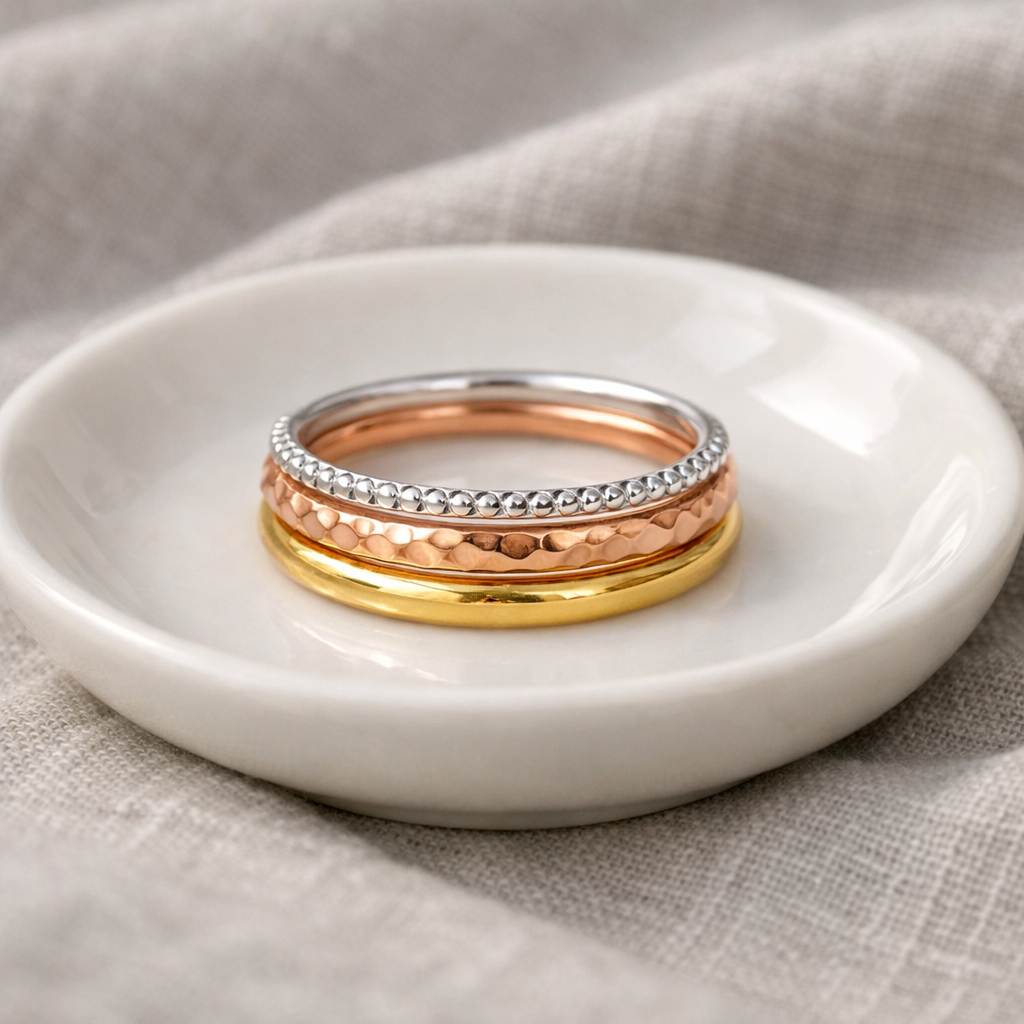
Finding the best place to buy stacking rings shouldn’t mean choosing between style, durability, and price. This Jewelry Guidebook guide zeroes in on affordable stacking rings and stackable ring sets that deliver everyday wear with smart materials, clear policies, and real value. We compare popular retailers side by side, explain which metals last, and share a ring stacking guide you can repeat on any budget. Bottom line: the “best” place depends on your style and priorities, but standout value-focused options include Mejuri, Missoma, Artizan Joyeria, Luah, Rebecca Haas Jewelry, Blue Nile, and Brilliant Earth—each for different reasons explained below.
How we evaluate affordable stacking rings
We use six pillars in the Jewelry Guidebook framework to keep our picks objective and budget-realistic.
- Materials & Construction: We favor 14–18K gold vermeil, sterling silver, and high-quality gold-plated stainless steel, with attention to thickness, hardness, and setting security.
- Comfort & Fit: Edges, width, and height (profile) must stack without pinching or spinning; we check true-to-size consistency and availability of half sizes.
- Design Versatility: Rings should layer with mixed metals, textures, and widths, and include both “anchor” pieces and slim spacers.
- Value-to-Price: We map prices to material quality and finishing, targeting under $250 per ring for daily stacks.
- Policies & Support: Transparent return windows, warranties, size exchanges, and care guidance are musts.
- Sourcing & Transparency: Clear metal markings, lab-grown or mined stone disclosure, and ethical sourcing context (plus GIA/IGI notes when gemstones are involved).
“Demi-fine jewelry blends precious metal surfaces (e.g., 14–18K gold vermeil) with accessible cores like sterling silver, aiming for an upscale look and everyday durability at mid-tier prices. It sits between fashion and fine jewelry, offering better longevity than basic plating without the cost of solid gold.”
High-fashion pricing spans wildly—think a Dior three-piece stack around €490, while an Hermès option reaches about $20,000—yet durable budget stacks also exist, like Luah’s 18K gold-plated stainless steel sets with a three-ring stack near £246, according to recent New York Times coverage of stacking rings trends (see the New York Times feature on stacking rings for context).
Comparison snapshot across popular retailers
| Retailer | Materials range | Typical price per ring | Returns/warranty | Style strengths | Sizing help |
|---|---|---|---|---|---|
| Mejuri | 14K vermeil, sterling silver, 14K solid gold | ~$75–$400 | Standard returns; limited warranty | Minimalist textures, ridges, daily classics | Online size guides |
| Missoma | Gold vermeil, sterling silver, gold-plated brass | ~$50–$200 | Standard returns; policy by item | Sculptural domes, trend-led silhouettes | Size guides, customer reviews |
| Artizan Joyeria | Gold-plated sterling, stainless steel options | ~$35–$120 | Standard returns; clear material notes | Curated sets, mixed metals, asymmetry | Fit notes on product pages |
| Luah | 18K gold-plated stainless steel | ~$45–$110 (sets vary) | Verify returns/repairs before buying | Durable daily-wear plating, sleek basics | Basic sizing guidance |
| Rebecca Haas Jewelry | Sterling silver, 14K gold-filled, 14K solid gold | ~$60–$350 (per band) | Made-to-order; exchanges case-by-case | Organic, artisan, pre-balanced sets | Made-to-order sizing options |
| Blue Nile | Sterling silver, 14K/18K gold, platinum, lab-grown accents | ~$100–$1,500 | Clear policies; strong support | Breadth of fine/demi-fine, classic bands | Robust sizing resources |
| Brilliant Earth | 14K/18K gold, platinum, lab-grown diamonds | ~$150–$1,200 | Transparent returns; warranty offered | Ethical options, educational stack guidance | Size tools and education |
What to buy for durability and value
- Materials that last under $250 per ring: 14–18K gold vermeil, sterling silver, and well-executed gold-plated stainless steel. Many everyday stacks can be built in this range from specialty makers and mid-tier brands (see the New York Times feature on stacking rings).
- Width and profile: Combine two or three slim 1–2mm bands with one wider anchor to prevent bulk. Stagger heights to create “visual breathing room” and plan the 3D profile so the stack feels smooth against adjacent fingers (reinforced by Brilliant Earth’s guide to stacking rings).
- Finishes: Coordinate polished and matte intentionally. Use two-tone pieces (e.g., silver and yellow gold) as transitions to make mixed metals look cohesive (see Brilliant Earth’s stacking tips).
Price snapshot
- Artisan or demi-fine bands: roughly $35–$250 per ring
- Curated three-ring sets: about ~$67–$246 depending on materials, thickness, and plating quality (see Artizan Joyeria’s stackable ring trends and the New York Times feature on stacking rings)
“Gold vermeil is a thick layer of gold (typically 14–18K) electroplated over sterling silver. To qualify as vermeil in many markets, gold thickness and quality must meet defined minimums. It offers the look of solid gold with better longevity than basic gold plating at a lower cost.”
Jewelry Guidebook
Our role is simple: unbiased comparisons, technical clarity, and clear “what to buy” ranges—covering metal choices, stone options (including lab-grown), certifications like GIA or IGI when relevant, warranties/returns, and ethical sourcing signals so value-focused readers can buy confidently. Our methodology is retailer-agnostic and includes hands-on evaluation when possible, transparent pros/cons, and repeatable frameworks. We’re not a retailer; our guidance centers on practical value you can use. The best stacks aren’t about price alone—they’re about smart curation, mixing textures, widths, and finishes in balanced proportions (a lesson echoed by the New York Times feature on stacking rings). Internally, we also maintain tools for ring sizing, metal and karat explainers, and mix-metal styling notes.
Mejuri
WWD highlights Mejuri’s Charlotte Slim Ring as a textured, slim anchor that layers cleanly without overpowering a stack (see WWD’s stacking rings roundup). Expect vermeil and solid gold options at approachable price points, straightforward returns, and a limited warranty. Mejuri excels at sleek, everyday pieces—think ridges, knife-edge profiles, and polished textures that read minimalist.
- Pros: Consistently finished vermeil, refined textures, easy to pair with ultra-slim bands.
- Cons: Some profiles run low-key; size and height variety can be limited compared with multi-brand marketplaces.
- Tip: Pair one textured Mejuri band with 1–2 ultra-slim spacers for a daily stack that won’t snag.
Missoma
Missoma’s Eny Puffy is a bold, sculptural dome that works solo or as a visual anchor in a slim stack (cited by WWD’s stacking rings roundup). Materials lean toward gold vermeil and plated alloys; pricing is trend-friendly. Puffy silhouettes ride higher, so check heights to keep adjacent bands comfortable. Returns are standard; confirm item-level details.
- Best use: Let one Missoma dome provide 40% of the visual weight and fill the rest with 60% slim bands for contrast and balance.
- Comfort note: Ensure neighboring rings are 1–2mm with lower profiles so the dome doesn’t cause rotation.
Artizan Joyeria
Artizan Joyeria leans into mixed metals, asymmetry, and vintage-leaning pairings, often bundling affordable sets under $200 that include a chunky dome plus midi-friendly bands (see Artizan Joyeria’s stackable ring trends). It’s ideal for value buyers who want curated looks and clear materials/plating notes.
- Who it’s for: Starter stacks and trend-led edits that still read cohesive.
- Fit tip: Cross-check ring heights when layering domes with slim bands to avoid pinching and spinning.
Luah
Luah focuses on durability via 18K gold-plated stainless steel—great for daily wear at mid-range set prices. The New York Times reports that a three-ring stack can land around £246 (see the New York Times feature on stacking rings). Expect a different feel than vermeil, but solid resilience.
- Trade-off: Steel cores are robust and budget-friendly, though they lack the sterling-silver base of vermeil.
- Policy check: Verify return and repair terms for long-term value.
- Styling: Use one Luah anchor plus 1–2 thin silver or gold-toned bands to make mixed-metal styling effortless.
Rebecca Haas Jewelry
Rebecca Haas offers curated stacking ring sets—pre-balanced combinations with artisan character and made-to-order flexibility (see Rebecca Haas’s ring sets). Metals typically include sterling silver, gold-filled, and solid gold, with timelines and exchange options detailed per item.
Example set snapshots (illustrative; check product pages for current pricing)
| Set name (example) | Metals available | Band widths | Total price (approx.) | Vibe |
|---|---|---|---|---|
| Minimal 2-Band Stack | Sterling, gold-filled | 1–2mm | Varies, often < $200 | Clean, everyday |
| Organic Texture Trio | Sterling, 14K options | 1–3mm mix | Varies, often <$350 | Artisan, textured |
| Mixed-Metal Balance Set | Sterling + gold-filled | Slim + one anchor | Varies, often <$300 | Two-tone, balanced |
Blue Nile
Blue Nile is a reliable marketplace for stackable bands across metals, widths, profiles, and budgets. The brand notes that many ring types—from diamond bands to simple metal rings—can be stackable and provides helpful FAQs and filters to narrow by metal, width, and profile (see Blue Nile’s stackable rings page). Strengths include transparent specs, breadth from sterling to 18K/platinum, and lab-grown diamond accents for budget sparkle. Build a 3–5 ring stack with filters, then use Blue Nile’s sizing guidance and support to finalize fit.
Brilliant Earth
Brilliant Earth shines as an educator and source of mid-priced, ethically minded pieces. Their ring-stacking advice—choose a dominant metal (~60% of the stack), coordinate finishes, and balance widths/heights for a comfortable 3D profile—is practical and replicable (see Brilliant Earth’s how to stack rings). Expect clear sourcing context, lab-grown options, and transparent return/warranty info.
- Example palette: 60% yellow gold bands with 40% white or rose accents; add a matte texture to tie metals together.
Jacquie Aiche
Use Jacquie Aiche as strategy fuel: start with a meaningful base ring to anchor the look, then build gradually with complementary bands (see Jacquie Aiche’s ring stacking guide). To translate the inspiration affordably, identify the base silhouette (dome, textured, or signet), then source slim 1–2mm companions from mid-priced retailers.
Mini flowchart to build smart
- Choose base ring → Add 1–2 slim 1–2mm bands → Confirm similar heights → Test comfort → Adjust finishes for cohesion
How to build a balanced stack on a budget
Five-step build (repeatable)
- Pick an anchor (dome, textured, or gemstone band).
- Choose a dominant metal (about 60% of the stack).
- Add 1–3 slim bands (1–2mm) to frame the anchor.
- Check the 3D profile and heights so the stack sits flush.
- Coordinate finishes (matte vs polished) to unify the look (reinforced by Brilliant Earth’s how to stack rings).
Tips that work
- Odd numbers often look more pleasing, and three rings is a realistic daily cap for comfort (see Finks Jewelers’ stacking overview).
- Example stacks:
- Under $200 per ring: one anchor dome + two slim silver/gold-tone bands.
- Under $500 total: curated three-ring set blending artisan and mid-tier pieces.
- Style note: High-low mixing is normal—many public figures blend fine and lower-cost jewelry in the same stack (noted by the New York Times feature on stacking rings).
Care, sizing, and maintenance tips
- Sizing: Midi rings are typically 3–4 sizes smaller; thumb rings often run larger and may sit best solo or with a thin companion band (see Finks Jewelers’ stacking overview).
- Fit and comfort: Stack odd numbers and cap around three rings per finger; balance widths/heights to reduce bulk and rotation (supported by Finks and Brilliant Earth).
- Cleaning: Do a gentle weekly clean; avoid harsh chemicals and water exposure to extend plating life. Align finishes (matte with matte; polished with polished) to mask micro-scratches. Always confirm return/repair policies pre-purchase.
- Common pitfalls:
- Vague metal specs or no plating thickness listed
- Ultra-thin bands that bend under light pressure
- Mismatched ring heights that cause pinch or gaps
Frequently asked questions
What metals are best for affordable stacking rings that last?
Choose 14–18K gold vermeil, sterling silver, or high-quality gold-plated stainless steel. They balance cost and durability for daily stacks; use Jewelry Guidebook’s metal guides to verify markings and return policies.
How thin is too thin for daily-wear stackers?
Aim for 1–2mm slim bands plus one wider anchor. Keep daily stacks to about three rings and match heights to prevent pinching; if a band flexes under light pressure, go thicker with help from Jewelry Guidebook’s quick stacking checks.
Are lab-grown stones a good choice for stackable rings?
Yes—lab-grown accents offer sparkle at lower cost. Prioritize secure, low-profile settings and confirm warranty/returns, using Jewelry Guidebook’s buying checklists as a reference.
How do I size for multiple thin bands to prevent spinning?
Use odd numbers, cap around three per finger, and consider half sizes. Add a slightly thicker anchor and keep ring heights similar so bands nest without gaps; Jewelry Guidebook’s sizing tools can help.
How should I clean and store stacked rings to reduce wear?
Clean gently weekly, avoid chemicals and water, and store pieces separately in soft pouches. Align finishes, remove stacks for workouts, and follow Jewelry Guidebook’s care guides to extend plating life.
Links cited: New York Times feature on stacking rings: https://www.nytimes.com/2025/12/04/fashion/jewelry-stacking-trend-rings.html; WWD’s stacking rings roundup: https://wwd.com/shop/shop-fashion/stacking-rings-layering-trend-1238033586/; Artizan Joyeria’s stackable ring trends: https://artizanjoyeria.com/blogs/news/stackable-ring-trends; Rebecca Haas’s ring sets: https://www.rebeccahaas.com/collections/ring-sets; Blue Nile’s stackable rings page: https://www.bluenile.com/jewelry/rings/stackable-rings; Brilliant Earth’s how to stack rings: https://www.brilliantearth.com/news/how-to-stack-rings/; Finks Jewelers’ stacking overview: https://www.finks.com/blogs/news-and-events/stacking-rings-the-jewelry-trend-that’s-here-to-stay?srsltid=AfmBOorKd-xbiWaOyJa0k0hqJi4gMerKfkjcXc6yxslkN_GdXDH8LgAz; Jacquie Aiche’s ring stacking guide: https://jacquieaiche.com/blogs/stories/ring-stacking-guide