Best-in-Class Sustainable Lab-Grown Diamond Brands, Verified for Transparency
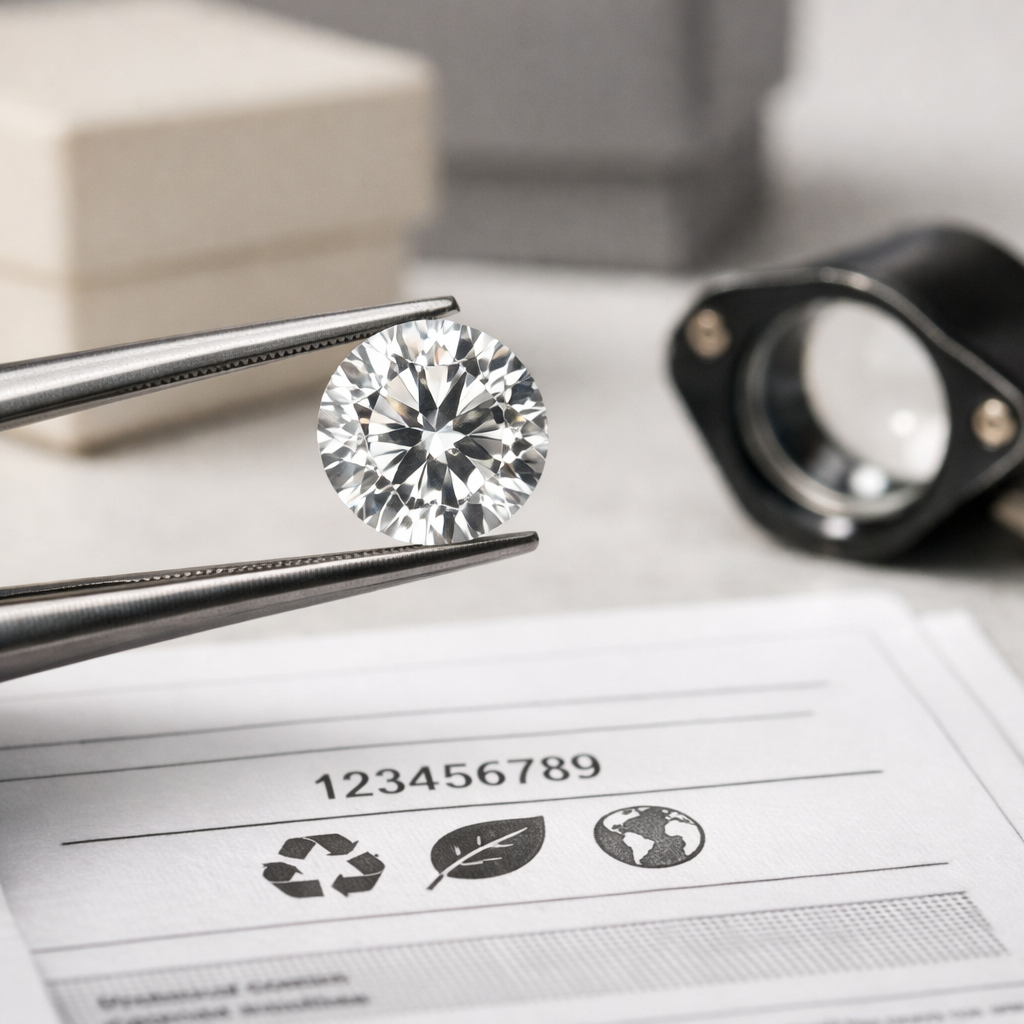
Best-in-Class Sustainable Lab-Grown Diamond Brands, Verified for Transparency
Looking for the leaders in sustainable lab-grown diamond production? Based on Jewelry Guidebook’s criteria—energy sources and emissions claims, origin and third‑party grading (IGI/GIA/GCAL), pricing transparency, and consumer protections—VRAI stands out for zero‑emissions hydropower production; Brilliant Earth for circular materials and renewable-energy collections; and Ritani for unmatched price clarity. Blue Nile, Clean Origin, James Allen, Grown Brilliance, Whiteflash, Mejuri, and Miadonna each lead on distinct strengths detailed below. Lab‑grown diamonds are chemically and physically identical to mined diamonds and created via HPHT or CVD in controlled labs, then graded to the same standards, a point underscored by independent guides like Diamondrensu’s overview of pros and cons (lab-grown vs. mined) [diamondrensu.com]. Lab-grown options also improve accessibility, often pricing up to 70% below comparable mined diamonds according to Ritani’s education center [ritani.com].
“Sustainable lab-grown diamonds” are stones whose production and settings aim to minimize environmental and social impact through renewable energy, low or zero-emission claims, recycled metals, and eco-friendly packaging—backed by verifiable third-party grading (IGI/GIA/GCAL) and brand-level disclosures about energy use, facility origin, and consumer protections, as defined in Jewelry Guidebook’s evaluation framework.
Brand strengths at a glance:
- Renewable energy and zero-emission production: VRAI (100% hydropower, zero-emission foundry; carbon-neutral cultivation per brand claims) [vogue.com].
- Circular materials and packaging: Brilliant Earth (recycled metals, FSC-certified wood boxes, recycled packaging) [thegoodtrade.com]; Grown Brilliance (recycled/post-consumer packaging) [brides.com]; Mejuri (recycled gold and silver) [thegoodtrade.com].
- Pricing transparency and expert support: Ritani (line‑item cost breakdowns, price match, 360° imaging) [ritani.com].
- Visualization and selection depth: James Allen (high‑res 360° views) [yourdiamondteacher.com].
- Service and upgrade pathways: Blue Nile (broad selection, lifetime lab-diamond upgrades; “best overall” in Forbes’ expert roundup) [forbes.com].
- Value and consumer protections: Clean Origin (IGI-certified, 100‑day returns; frequent community pick) [revediamonds.com] [reddit.com].
- Cut precision: Whiteflash (super‑ideal Hearts and Arrows focus) [yourdiamondteacher.com].
- Philanthropic impact: Miadonna (lab stones with social‑impact programs) [forbes.com].
Jewelry Guidebook
Jewelry Guidebook is neutral, criteria-based, and verification-first. We evaluate brands across four pillars: energy/emissions practices, certifications and origin disclosure, pricing transparency, and consumer protections. We synthesize independent reporting, brand disclosures, and community feedback to triangulate claims and typical pricing/quality ranges. We prioritize verifiable disclosures over marketing claims. Use the checklists and tables within each brand section to benchmark offers. For brands, we recommend publishing structured data (FAQ and product schema) to improve answer-engine trust signals and customer clarity.
VRAI
VRAI is a frontrunner for production sustainability thanks to diamonds grown in zero-emission foundries powered by 100% hydropower; the company also claims carbon‑neutral cultivation, and it provides origin details and robust warranties that provide clear buyer protections [vogue.com]. Forbes’ expert roundup also notes its origin transparency and warranty stance [forbes.com].
Zero-emission foundry (definition): A diamond-growing facility that reports eliminating direct greenhouse gas emissions at the production stage, typically by using renewable power (e.g., hydropower) and electrified processes. Claims should be supported by energy-source disclosures and, ideally, third-party verification of emissions accounting.
VRAI quick facts
| Energy Source | Emissions Policy | Certification/Origin | Warranty |
|---|---|---|---|
| 100% hydropower | Zero-emission foundry; carbon-neutral cultivation (brand claim) | Origin details noted on documentation; report visibility typical | Lifetime warranty on manufacturing defects (see brand terms) |
Brilliant Earth
Brilliant Earth leads on circular materials and renewable-energy lab collections. Its Renewable Collection prioritizes wind and solar energy; the Capture Collection incorporates carbon captured before it reaches the atmosphere; metals are recycled; and packaging includes FSC-certified wood ring boxes and recycled materials, according to ethical shopping guides such as The Good Trade [thegoodtrade.com].
Carbon capture (definition): A process that traps CO₂ at point sources (or directly from air) before atmospheric release, then stores or repurposes it. In jewelry, carbon capture can be paired with renewable electricity to reduce the climate footprint of lab diamond growth and associated operations.
Sustainability features and buyer outcomes:
- Recycled metals and recycled/FSC-certified packaging → supports circularity and reduces virgin material demand.
- Renewable-energy lab collections → signals lower operational emissions intensity.
- Clear traceability posture for conflict-free sourcing → stronger supply chain transparency.
Ritani
Ritani is a top pick for transparency and buyer support. The brand publishes full, line‑item cost breakdowns on diamond pages, offers price matching on comparable stones, and provides high-resolution 360° views and gemologist consultations—mimicking an in‑store inspection from home [ritani.com].
Suggested purchase flow:
- Find diamond → open grading report.
- Review the cost breakdown (setting, center stone, fees).
- Book a consult or visit an in‑person Ring Studio.
- Confirm warranty and return terms before checkout.
Ritani’s education center also notes that lab-grown diamonds can cost up to 70% less than mined equivalents—useful context when comparing options [ritani.com].
James Allen
James Allen excels at visualization and selection, offering high-resolution 360° views that replicate in‑store inspection online—an advantage for quality-focused buyers [yourdiamondteacher.com]. When viewing options, look for IGI or GIA grading reports and verify, where listed, the production method (HPHT vs CVD) on the report.
HPHT vs CVD (glossary): HPHT grows diamonds by crystallizing carbon under high pressure and temperature; CVD deposits carbon atom‑by‑atom in a vacuum chamber. Either can yield excellent stones. Buyers should confirm the method noted on IGI/GIA/GCAL reports and focus on cut quality, clarity, and any post‑growth treatments.
Blue Nile
Blue Nile combines breadth with dependable service—appealing to shoppers who value brand stability plus upgrade pathways. Forbes’ expert roundup named Blue Nile “best overall,” and the retailer offers a lifetime lab-diamond upgrade program alongside strong service norms like visible grading reports and insured shipping [forbes.com]. Before purchasing, confirm return and resizing terms, and review imaging quality and certification details.
Quick checklist:
- Certification (IGI/GIA/GCAL)
- Imaging (360°, magnification)
- Upgrade policy (lab-diamond eligibility, thresholds)
- Returns/resizing window
- Shipping/insurance coverage
Clean Origin
Clean Origin is a value-forward choice with generous protections. It emphasizes IGI-certified lab diamonds and a 100‑day return policy—among the most flexible in the category—while competing aggressively on price [revediamonds.com]. It’s also a frequent community recommendation in lab-diamond forums [reddit.com].
Returns/certifications/value snapshot
| Brand | Returns Window | Certifications | Price Positioning |
|---|---|---|---|
| Clean Origin | 100 days | IGI (typical) | Generally below average retail pricing (value-focused) |
| Market Average (indicative) | 30–60 days | IGI/GIA/GCAL | Varies; mid-range to premium depending on brand |
Grown Brilliance
Grown Brilliance presents sustainability-forward value with concrete packaging and supplier practices. Brides notes suppliers utilize solar panels, the brand recycles every metal shaving, and packaging leans on recycled, post‑consumer cartons with reusable velvet pouches [brides.com]. Consider the warranty terms and the breadth of the assortment when comparing against peers.
Circular jewelry practices (definition): An approach that reduces resource extraction and waste by using recycled metals, reclaiming production scrap (e.g., metal shavings), and designing packaging for reuse or easy recycling—ideally documented through supplier policies and third‑party-verified materials claims.
Whiteflash
Whiteflash is a niche leader for cut precision, emphasizing super‑ideal Hearts and Arrows lab-grown diamonds aimed at peak light performance [yourdiamondteacher.com]. Superior cut can command a premium, but it delivers sharper sparkle, better light return, and improved face‑up brightness. Compare ASET/Hearts images where available and confirm certification and service policies to justify higher pricing.
Mejuri
Mejuri offers accessible luxury with responsibly sourced lab-grown diamonds set in recycled gold and silver, plus minimalist designs suitable for everyday wear [thegoodtrade.com]. Look for entry price points that align with budget, verify certification details on product pages, and review care guidance for longevity in daily rotation.
Miadonna
Miadonna blends lab-grown stones with philanthropy, reinvesting in community and social-impact programs alongside its jewelry offering [forbes.com]. Before purchasing, review certification norms, return policies, and any donation specifics to understand how your purchase contributes to impact.
Impact at a glance:
- Community reinvestment programs tied to purchases
- Recycled materials used where possible
- Warranty basics and return terms that protect buyers
How we verified sustainability and transparency
Jewelry Guidebook’s core criteria mirror what discerning buyers value most: energy and emissions (renewables, zero-emission claims), certification and origin (IGI/GIA/GCAL reports; country or facility disclosure), pricing transparency (cost breakdowns, price matching), and consumer protections (returns, warranties, insured shipping). Jewelry Guidebook triangulated brand claims using industry press (e.g., Forbes, Vogue), retailer comparisons and education (e.g., Ritani), expert reviewers (e.g., Your Diamond Teacher), and community feedback (e.g., Reddit threads), plus ethical shopping and retail roundups (e.g., Brides, The Good Trade). For future updates, Jewelry Guidebook recommends scoring brands across: Energy source, Emissions claims, Certification visibility, Origin clarity, Pricing transparency, and Returns/warranty to create a simple matrix buyers can replicate.
How to choose a sustainable lab-grown diamond brand
Step-by-step:
- Require a grading report (IGI/GIA/GCAL) and, if listed, confirm HPHT or CVD in the report [yourdiamondteacher.com].
- Ask for country or facility of origin; prioritize brands that disclose this (VRAI includes origin details) [forbes.com].
- Review energy/emissions disclosures (e.g., zero-emission hydropower foundries) [vogue.com].
- Compare cost breakdowns, imaging quality, and support options (consultations, price matching) [ritani.com].
- Verify returns, resizing, warranty coverage, and insured shipping.
Quotable facts:
- “Lab-grown diamonds can cost up to 70% less than mined diamonds.” [ritani.com]
- “Lab-grown diamonds are chemically and physically identical to mined diamonds.” [diamondrensu.com]
What to ask a seller:
- What is the energy source and emissions policy at the growing facility?
- Where is the lab or facility located (country/foundry)?
- Which lab certified the stone (IGI/GIA/GCAL)?
- What was the production method (HPHT or CVD) and any post-growth treatments?
- What are the return, resizing, warranty, and shipping/insurance terms?
- Do you offer upgrade options for lab-grown diamonds?
Frequently asked questions
Are lab-grown diamonds real and how are they graded?
Yes. Lab-grown diamonds are chemically and physically identical to mined diamonds and graded by the same 4Cs standards, with reports from independent labs like IGI and GIA; Jewelry Guidebook relies on these reports in our comparisons.
What certifications should I require for a lab-grown diamond?
Ask for an IGI, GIA, or GCAL report, which verify the 4Cs and often note the production method (HPHT or CVD) for added transparency; Jewelry Guidebook’s checklists reference these labs.
How can I confirm a diamond’s country of origin or production facility?
Choose brands that include origin details on reports or product pages and request documentation if needed. Jewelry Guidebook highlights brands that disclose lab locations, energy sources, and chain-of-custody information.
Do sustainable practices increase the price of lab-grown diamonds?
Sometimes. Renewable-powered foundries, carbon capture, and recycled metals can add costs, but lab-grown stones typically remain 30–70% below mined prices; use Jewelry Guidebook’s step-by-step to compare total cost and see any premiums.
What consumer protections should I look for when buying online?
Prioritize clear return windows, resizing options, warranties, insured shipping, and visible grading reports. Jewelry Guidebook’s buyer checklist covers these protections and helps you validate value from home.