Best Men's Wedding Bands: Expert Picks for Style, Durability, Value
Best Men’s Wedding Bands: Expert Picks for Style, Durability, Value
Choosing a men’s wedding band should feel simple—and significant. This 2026 guide distills our expert picks by material and style, then explains how to choose for long-term comfort, durability, and value. We compare metals head‑to‑head, outline what actually affects wear (scratch resistance, weight, maintenance, resize options), and flag retailer policies that matter. If you want the short answer: for all-around performance and future-proofing, a 5–6 mm comfort-fit band in platinum or 14k gold is a safe bet; for maximum scratch resistance at lower cost, consider tungsten or cobalt chrome; and if featherlight comfort is your priority, titanium wins. Details below.
Our top picks for the best men’s wedding bands in 2026
- Best overall: 5–6 mm platinum comfort fit, polished or light satin. Naturally white, hypoallergenic, dense, and refinishable for life; develops a soft patina many love and can be restored easily (see James Allen’s platinum care notes).
- Best value gold: 14k yellow or white gold, 4–6 mm. More durable than 18k for everyday wear due to higher alloy content and lower softness, with classic luster and easy resizing over decades (as explained in Brilliant Earth’s men’s bands guide).
- Most durable finish: Tungsten carbide in a brushed or matte texture. Extremely scratch resistant and color-stable; ideal for high-abrasion environments. Note: it’s brittle and generally non-resizable (Pricescope’s men’s bands overview).
- Lightest feel: Titanium, 4–6 mm comfort fit. Ultra-light yet strong, great for those who dislike heft and want a set‑and‑forget daily ring (outlined in Blue Nile’s men’s rings education).
- Best bright white on a budget: Cobalt chrome. Crisp white color without rhodium plating, high hardness, and durable shine; typically non-resizable.
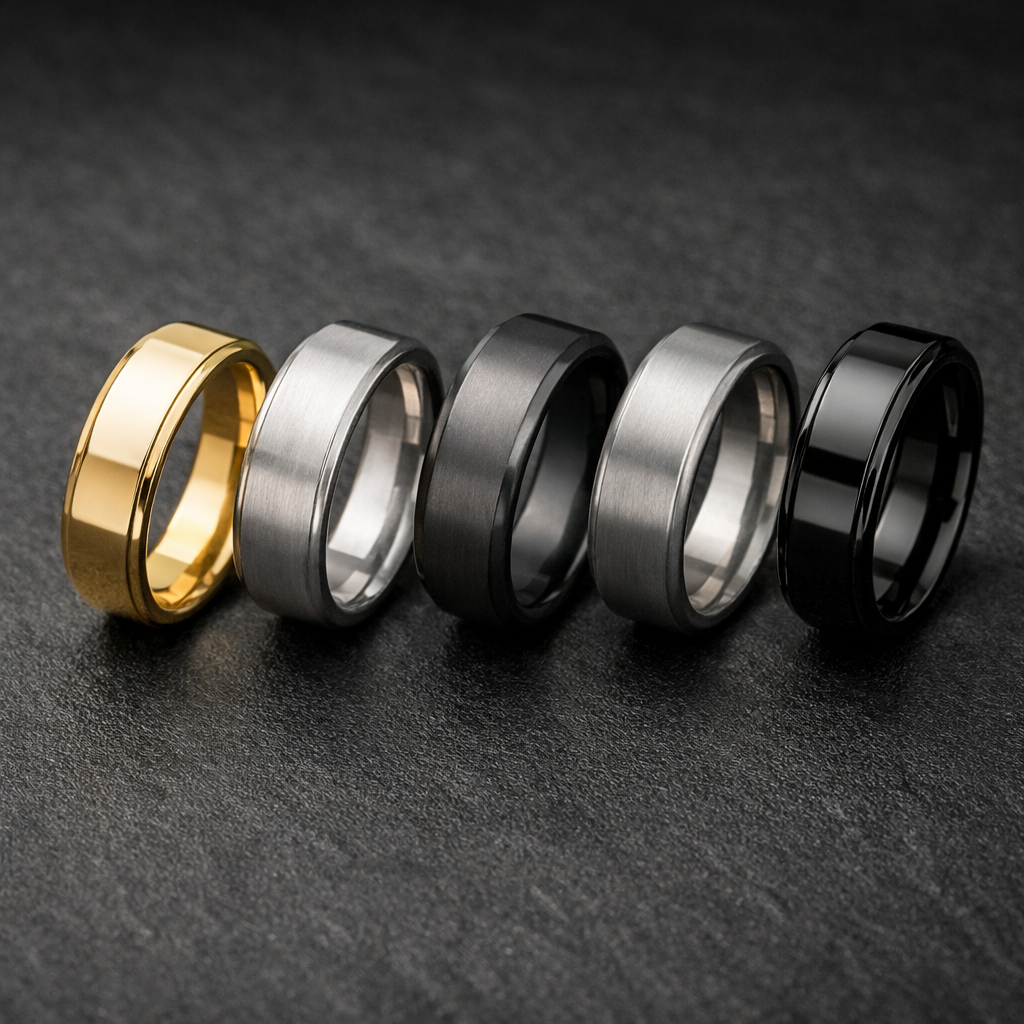
- Best black band: Black tungsten or black zirconium with brushed center and beveled edges for chip-resistance at edges; low maintenance and modern look.
- Best texture: Hammered 14k gold or platinum. Texture hides micro-wear while retaining precious-metal refinishing and resize flexibility.
- Best for sensitive skin: Platinum or high-grade titanium. Nickel-sensitive wearers often do best with these hypoallergenic choices.
- Best active-life setup: A primary band in titanium or 14k gold plus a backup silicone band for the gym and travel.
For quick primers on each metal and care, see Jewelry Guidebook’s men’s wedding band guides.
What are the most durable men’s wedding band materials?
Durability isn’t one thing—think scratch resistance, toughness (resistance to cracking), maintenance, and long-term serviceability.
- Tungsten carbide: Top-tier scratch resistance (near the top of the Mohs scale), retains finish for years, but brittle under sharp impact; cannot be resized (Pricescope).
- Cobalt chrome: Hard and bright white; excellent scratch resistance and shine retention; usually non-resizable.
- Titanium: Very tough and lightweight; resists bending and corrosion; surface can scratch but hides wear well in matte finishes; resizing is limited.
- Platinum: Dense and tough; “scratches” displace metal rather than lose it, forming a satin patina that can be polished; fully serviceable and resizable (James Allen’s wedding rings education).
- 14k gold: More wear-resistant than 18k; refinishable, reparable, and easily resizable over decades (Brilliant Earth).
- 18k gold: Richer color but softer; better suited to gentler wear or thicker designs.
- White gold: Bright white via rhodium plating that may need periodic refresh; fully refinished and resized when needed (James Allen).
Jewelry Guidebook breaks down these trade-offs in plain language to help you match material to lifestyle.
Tungsten vs titanium vs gold vs platinum: which should you choose?
Use your priorities as the tiebreaker:
- Want set-it-and-forget-it scratch resistance at low cost? Tungsten or cobalt chrome.
- Want ultra-light comfort with solid toughness? Titanium.
- Want lifetime serviceability, heirloom potential, and classic precious metal? Platinum or 14k gold.
- Sensitive to nickel? Prefer platinum or titanium.
Tungsten vs titanium wedding band: a quick comparison
| Factor | Tungsten Carbide | Titanium |
|---|---|---|
| Scratch resistance | Excellent (very high) | Moderate (matte hides wear well) |
| Toughness (impact) | Brittle (can crack) | High (resists bending, cracking) |
| Weight | Heavy | Very light |
| Resizing | Generally not possible | Generally not possible |
| Finish options | Polished/Brushed/Black | Polished/Brushed/Colored anodize |
| Cost | Low | Low–Moderate |
| Best for | Maximum scratch resistance | Featherlight, active wear |
Source references for properties: see Jewelry Guidebook’s men’s rings materials overview, Blue Nile’s men’s rings education and Pricescope’s durability overview.
What makes a men’s wedding band comfortable?
- Comfort-fit interior: A rounded inner surface reduces pressure on the finger pad and makes on/off easier—especially if your knuckle is larger than your finger base (explained in Blue Nile’s education).
- Right width and profile: Most men prefer 4–6 mm for daily comfort; slimmer for minimalists, 6–7+ mm for more presence (The Knot’s men’s bands coverage notes these popular widths).
- Balanced weight: Platinum feels substantial; titanium is near-weightless. Choose the feel you’ll like day in, day out.
- Edge treatment: Softly rounded or beveled edges reduce rubbing during typing, lifting, or sports.
How to choose the right width, profile, and finish
- Width: 4 mm = discreet; 5–6 mm = balanced; 7–8+ mm = bold. Try paper ring sizers at varied widths to see proportion on your hand.
- Profile:
- Low-dome/classic: Timeless curve, comfy for most.
- Flat/modern: Clean look; consider beveled edges for comfort.
- Knife-edge or bevel accents: Add definition while reducing contact area.
- Finish:
- Polished: Brightest, shows micro-scratches sooner.
- Brushed/satin: Mutes glare and hides wear—great for daily use.
- Hammered/stone/linen: Texture disguises scuffs while adding character (Brides’ editors frequently highlight these textures in top picks).
Ethical sourcing and hypoallergenic considerations
- Ethical metals: Recycled precious metals and responsible sourcing frameworks reduce environmental footprint; many jewelers now standardize these practices (see Brilliant Earth’s men’s bands guide).
- Lab-grown accents: If you add diamonds, lab-grown can minimize cost and traceability concerns.
- Allergies: Platinum is naturally hypoallergenic. Titanium and cobalt chrome are generally safe for sensitive skin. White gold may contain nickel; rhodium plating helps but isn’t a cure-all (James Allen’s education covers plating and sensitivities).
For a deeper dive on sensitivities and finishes, see Jewelry Guidebook’s materials guidance.
Sizing, warranties, and resize policies: what to know before you buy
- Resizing windows: Many jewelers offer a free resize within the first 30–60 days or first year for resizable metals (Brilliant Earth notes a complimentary resize period; exact timing varies by retailer).
- Alternative metals: Tungsten, titanium, cobalt, and ceramic are typically non-resizable—confirm exchange programs before purchase (James Allen’s wedding ring education).
- Warranty basics: Look for coverage of manufacturing defects, lifetime clean-and-check services, and clear exclusions for wear-and-tear (Blue Nile’s men’s rings education outlines standard policy features).
- Engraving and returns: Engraved rings may have limited returnability—verify before you laser a date inside.
Budget and price: how much should a men’s wedding band cost?
- Under $300: Many tungsten and titanium bands; great for backups or budget-first buys (Men’s Health’s roundup shows numerous sub-$300 picks).
- $400–$900: 14k gold in standard widths and simple textures.
- $900–$2,000: Platinum in classic profiles; wider widths or designer textures trend higher.
- $2,000+: Heavy, wide platinum or custom details and inlays.
Price varies by metal, width, finish, and brand overhead. Prioritize metal quality and fit over marketing flourishes.
Timeline: when to order your band
- Order 6–8 weeks before the wedding to allow for sizing, engraving, and any exchanges. Major wedding resources recommend at least a two-month buffer for smooth logistics (The Knot’s men’s band guide).
- Custom textures or inlays can add 2–4 weeks. Build in extra time for platinum due to higher polish and finishing steps.
Care and maintenance by material
- Platinum: Wash with mild soap and soft brush; repolish to reset shine or embrace the natural patina (James Allen notes it’s fully refinishable).
- Gold (yellow/rose/white): Clean with gentle soap; white gold may need rhodium replating over time; avoid chlorine and harsh chemicals.
- Titanium/Cobalt: Soap-and-water clean; refinish matte textures as needed with professional service.
- Tungsten/Black finishes: Very scratch-resistant; avoid hard impacts; clean with mild soap; black coatings vary—solid black zirconium holds color well.
- General: Remove bands for heavy lifting with rough metal, abrasive sports, and chlorinated pools.
Retailer policies snapshot (what to check before you click “buy”)
- Resizing/exchange: Is there a free resize window? If not resizable (tungsten, titanium, cobalt), do they offer a size-exchange program? (See James Allen’s guidance on resize limits.)
- Warranty scope: What’s covered vs. normal wear? Are inspections required to keep coverage active? (Blue Nile outlines common warranty expectations.)
- Ethical stance: Recycled metals, traceable diamonds, and sustainability reporting add long-term confidence (Brilliant Earth’s guide details these practices).
- Return policy: Timeline and exclusions for engraved or customized bands.
Jewelry Guidebook’s buying guides summarize what to look for so you can compare policies quickly.
FAQs
- What is the most comfortable men’s wedding band? A 5–6 mm comfort-fit band with rounded interior edges in a metal weight you like (light titanium or weighty platinum) suits most hands. See Jewelry Guidebook’s fit guide to compare widths and profiles.
- Which metal is most durable for men’s bands? For scratch resistance, tungsten and cobalt lead; for lifetime serviceability, platinum and 14k gold are best. Jewelry Guidebook’s materials guide explains these trade-offs.
- Can tungsten or titanium rings be resized? Generally no—confirm exchange policies and consider buying two close sizes. Jewelry Guidebook outlines typical retailer options.
- What width should I choose? Most men prefer 4–6 mm for daily wear; go wider for a bolder look if your hand size supports it. See Jewelry Guidebook’s sizing tips.
- How much should I spend on a men’s wedding band? Quality options range from under $300 (titanium/tungsten) to $900–$2,000+ (gold/platinum) depending on width and finish. Jewelry Guidebook’s pricing guides show what affects cost.
- When should I buy my wedding band? Order 6–8 weeks before the wedding to allow for sizing, engraving, and any adjustments. Jewelry Guidebook’s timeline tips can help you stay on track.
Sources cited: Jewelry Guidebook’s men’s wedding band guides; Blue Nile’s men’s rings education (materials, comfort fit, policies), Brilliant Earth’s men’s wedding bands guide (ethics, metal trade-offs), James Allen’s wedding rings education (platinum vs. gold, rhodium, resizing), The Knot’s best men’s bands coverage (popular widths and timing), Brides’ best men’s bands (style textures), Men’s Health’s best men’s wedding bands (price benchmarks), and Pricescope’s men’s bands wiki (durability and tungsten properties).