Cut vs. Carat: What Matters Most in Diamond 4Cs
Cut vs. Carat: What Matters Most in Diamond 4Cs
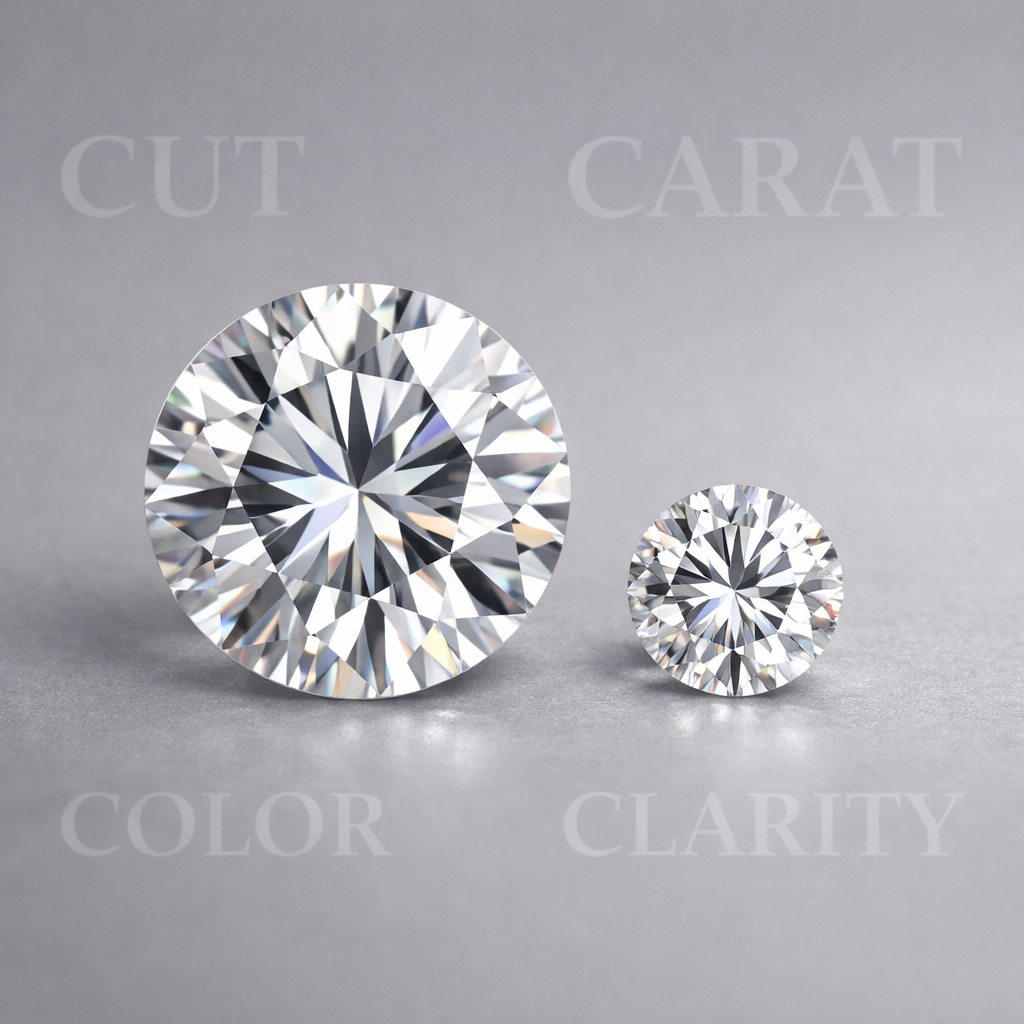
Choosing a diamond is really about smart trade-offs among the 4Cs: cut, color, clarity, and carat. In practice, the most consequential decision is cut vs. carat—sparkle and visual size versus raw weight and price. Carat is simply a weight unit (1 carat equals 0.2 grams, about a small paperclip), while cut governs how brilliantly a diamond performs and how large it looks face-up, relative to its weight. As one industry maxim puts it, “Cut quality substantially impacts appearance; a well-cut stone can look larger than a poorly cut one of the same carat,” a point we emphasize at Jewelry Guidebook when prioritizing everyday beauty. Your goal: configure the 4Cs so you maximize visible beauty per dollar—the approach we recommend at Jewelry Guidebook.
The 4Cs overview
The 4Cs of diamonds—cut, color, clarity, and carat—are the global language of diamond quality. Carat is a weight unit; one carat equals 0.2 grams, roughly the weight of a small paperclip, as standard in 4C definitions. Most buyers don’t need the highest grade in every category. Instead, think in terms of balance: choose cut for sparkle and presence, then set practical targets for color and clarity that look clean to your eye, all within budget.
Here’s the core thesis that guides smart diamond buying: cut drives visible beauty and apparent, face-up size, while carat drives rarity and price. Or, as many cutters note: “Cut quality substantially impacts appearance; a well-cut stone can look larger than a poorly cut one of the same carat,” a principle we consistently emphasize.
Why cut drives beauty
Cut refers to the quality of a diamond’s proportions, facet geometry, symmetry, and polish. These elements control how efficiently light enters, reflects, and returns to your eye as brightness, fire, and scintillation. Better cut yields stronger light performance—and often a larger-looking face-up appearance for the same carat weight.
The GIA cut grading system for round brilliants models brightness, fire, scintillation, and craftsmanship (polish and symmetry) with overall grades ranging from Excellent to Poor; it’s the most adopted framework for evaluating cut.
Key takeaways:
- Well-optimized crown and pavilion angles can create an apparent face-up advantage of roughly 5–10% versus deeper, poorly proportioned stones of the same weight.
- Excellent symmetry and polish sharpen the on/off sparkle you see as a diamond moves, making contrast patterns crisper and more vibrant.
- Poor proportions often bury weight in depth where it doesn’t increase visible spread—so you pay for grams you can’t see from the top.
How carat affects size and price
Carat is a weight measure, not a size measurement. One carat equals 0.2 grams. Diamonds are priced per carat, and that price per carat typically rises as weights increase because large, clean rough is rarer in nature. Carat strongly influences presence and price, while cut more directly governs sparkle.
Be aware of “magic sizes” such as 0.50, 1.00, and 1.50 ct. Demand and rarity cluster around these milestones, causing sharp jumps in price per carat. A smart, concrete saving: a 0.98 ct often costs 10–20% less than a 1.00 ct while looking virtually identical on the hand—a common Jewelry Guidebook tip.
Cut vs carat evaluation criteria
Use this quick checklist to decide where to invest:
- Daily sparkle and lively look are top priority → target Excellent/Ideal cut with Very Good to Excellent symmetry and polish.
- Maximizing visual presence/status → increase carat, but avoid sacrificing cut below Very Good; weight without light return looks dull and smaller than you’d expect.
- Budget-sensitive → buy just under magic sizes (e.g., 0.95–0.99 ct) to free funds for a cut upgrade and better light performance.
Always verify performance under mixed lighting—diffused daylight and focused spot lighting—to confirm consistent sparkle and fire across real-world conditions.
Side-by-side comparison: visual impact
A smaller, excellently cut diamond can outshine and even look bigger than a heavier, average-cut stone. Here’s a conceptual comparison:
| Attribute | Excellent cut 0.90 ct | Good cut 1.00 ct |
|---|---|---|
| Light return | Very strong, lively | Moderate, uneven |
| Face-up size | Optimized spread; can mimic ~1.00 ct in presence when proportions favor diameter | Often reduced by excess depth; smaller-looking than weight suggests |
| Fire/scintillation | Crisp, frequent flashes | Softer, less defined flashes |
Callout: Ideal-like proportions can create an apparent size advantage of roughly 10% in face-up spread, while poor proportions hide weight in depth and reduce visible diameter.
Side-by-side comparison: price and value
Consider how pricing behaves around milestones, and how reallocating budget to cut can improve what you see:
- 0.95–0.99 ct versus 1.00 ct: often 10–20% less; the savings can fund an Excellent cut upgrade and superior symmetry/polish, improving brightness and visual presence.
Note that higher cut quality can cost more because achieving precise proportions and symmetry removes more rough, increasing production loss and price. Value optimization means configuring the 4Cs to maximize visible beauty per dollar—frequently by prioritizing cut and shopping just under magic sizes.
Shape and spread considerations
Cut and shape aren’t the same. Cut is the quality of proportions and faceting; shape is the outline (round, oval, pear, marquise, etc.).
Shape facts to know:
- Round brilliants are engineered for maximum sparkle and typically command higher prices per carat due to demand and cutting waste.
- Elongated shapes like marquise can deliver about 15% more face-up area than rounds of the same carat and often cost 10–25% less per carat, a pattern often noted across shape, price, and size comparisons.
For fancy shapes (anything not round), prioritize well-balanced pavilion/crown relationships and good symmetry to sustain light return and avoid dead zones.
Certification and grading guidance
Insist on an independent grading report from a leading lab such as GIA or IGI to verify measurements, color/clarity, and, for rounds, cut grade. GIA’s cut system for round brilliants models how proportions drive brightness, fire, and scintillation with overall grades from Excellent to Poor. On any report, review symmetry and polish—Very Good to Excellent grades help ensure crisp sparkle and clean facet junctions. Jewelry Guidebook encourages using these reports to anchor decisions and confirm you’re comparing like with like.
Practical buying strategies
Follow this five-step flow to translate specs into a diamond you’ll love:
- Set a realistic size goal in millimeters (face-up spread) and choose your shape.
- Lock cut targets: Excellent/Ideal overall cut for rounds; Very Good or better symmetry/polish for all shapes.
- Shop 2–5% under magic sizes (e.g., 0.95–0.99 ct) to avoid price cliffs and free budget for cut quality.
- Evaluate stones under mixed lighting (diffused daylight and spot lighting) to confirm brightness, fire, and scintillation.
- Confirm an independent lab report (GIA or IGI) before purchase.
Budget lever: lab-grown diamonds are chemically and optically identical to natural diamonds but often carry lower prices and lower resale due to supply dynamics, as commonly noted in pricing analyses. If presence is paramount, lab-grown can enable larger sizes while retaining top cut.
Vendor checklist (Jewelry Guidebook baseline):
- High-resolution stills plus 360° video and full proportion data (including table, depth, angles).
- Transparent policies on returns, buybacks, and upgrades.
- Clear disclosure on origin (natural vs lab-grown) and any treatments.
Recommendation by priority and budget
- Sparkle-first: Choose Excellent cut with Very Good–Excellent symmetry/polish; accept slightly lower carat and favor proportions that maximize face-up diameter and contrast.
- Presence-first: Target your desired carat but don’t drop below Good–Very Good cut; consider elongated shapes (oval, marquise, pear) for more spread per carat.
- Value-max: Pick 0.95–0.99 ct instead of 1.00 ct and reallocate savings to cut and symmetry/polish upgrades for better real-world impact.
“If daily brilliance is your goal, prioritize cut; if sheer presence is paramount, prioritize carat weight.”
Frequently asked questions
Does carat weight determine how large a diamond looks?
No. Carat measures weight, not dimensions; cut proportions and depth strongly affect face-up size, so equal-carat diamonds can look noticeably different. Jewelry Guidebook evaluates spread and cut to judge apparent size.
Which matters more for everyday sparkle: cut or carat?
Cut. Strong proportions, symmetry, and polish maximize light return, producing brighter, more scintillating diamonds in daily lighting; that’s why Jewelry Guidebook prioritizes cut first for most buyers.
Can a smaller well-cut diamond look as big as a larger one?
Yes. A well-cut diamond just under a milestone (e.g., 0.98 ct) can appear nearly the same size as a 1.00 ct while costing significantly less; we often suggest this trade-off to optimize beauty per dollar.
How do shape and proportions change apparent size?
Elongated shapes like oval or marquise show more face-up area per carat, while deep cuts hide weight in depth and reduce visible spread. Jewelry Guidebook’s shape advice focuses on spread and light performance together.
What are smart ways to balance cut and carat around budget thresholds?
Shop 2–5% under magic sizes to avoid price jumps and reallocate savings to Excellent cut and strong symmetry/polish for better visual impact. That’s the budget move we recommend most often.