How To Find The Best-Rated Lab Grown Diamond Engagement Rings Online
How To Find The Best-Rated Lab Grown Diamond Engagement Rings Online
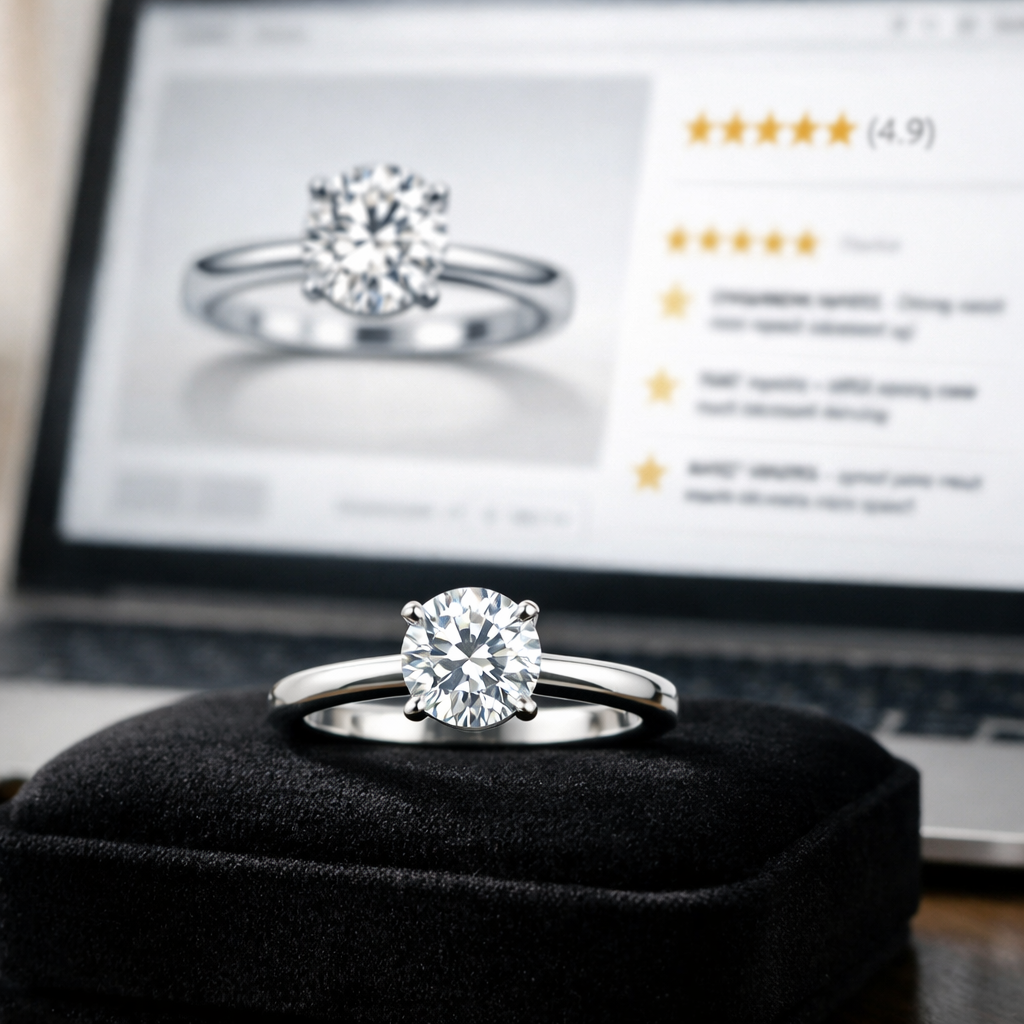
Finding the best rated lab grown diamond engagement rings online starts with a clear plan: set your budget and style goals, lock in independent grading, and use modern evaluation tools that mimic an in-store visit. Lab-grown diamonds typically cost significantly less than mined stones, so you can prioritize sparkle, size, and setting without overspending. The steps below from Jewelry Guidebook walk you through what to check—cut quality, eye-clean clarity, trusted certifications (IGI vs GIA), 360 diamond view and virtual try-on engagement rings—so you can buy with confidence and zero surprises.
Start with clear goals and budget
Decide what matters most: visual size, sparkle, or sourcing. Lab-grown diamonds can cost up to about 40% less than equivalent mined diamonds, expanding your options at the same spend, according to MiaDonna’s buying tips (a leading lab-grown retailer) MiaDonna’s lab-created ring guide.
- Set the top three priorities (for example: 1) sparkle, 2) carat look, 3) ethical sourcing).
- Choose a starting shape and carat target, then flex color and clarity to meet budget. Small differences in the 4Cs can meaningfully affect both brilliance and price, so make trade-offs deliberately Everyday Diamonds’ online guide.
Quick priorities worksheet (from Jewelry Guidebook):
- Style: solitaire, halo, side-stone, three-stone, vintage-inspired
- Shape: round, oval, cushion, emerald, pear, marquise, radiant
- Size goal: target carat and millimeter spread
- Value levers: color, clarity, metal, setting complexity
- Policies must-haves: returns, resizing, warranty, upgrade
Suggested budget bands (align to your price range):
| Band | Cut target | Color target | Clarity target | Carat approach | Shape notes | Why it works |
|---|---|---|---|---|---|---|
| Good | Very Good | H–I | Eye-clean SI1–SI2 | Optimize spread over weight | Ovals, pears, marquise | Maximizes visual size and value |
| Better | Excellent | G–H | VS2–VS1 | Balance size and cut | Round, cushion, radiant | Bright, near-colorless look |
| Best | Ideal/Excellent | D–F | VVS–VS1 | Prioritize cut first | Any shape | Top-tier brilliance and color purity |
Learn the 4Cs for lab grown diamonds
“The 4Cs—cut, color, clarity, and carat—are the universal diamond grading pillars used for both lab-grown and mined diamonds to describe how a diamond looks and how it’s priced. Mastering these lets you maximize beauty per dollar, and lab-grown often enables a larger carat size at the same budget.” International Gem Society’s lab-diamond guide Jewelry Guidebook emphasizes value ranges that keep face-up beauty high without overspending.
Value guide at a glance:
- Cut: Prioritize Excellent or Very Good for best sparkle and light return Everyday Diamonds’ online guide.
- Color: D–F is colorless; G–H is near-colorless and strong value with a white-on-hand look International Gem Society’s lab-diamond guide.
- Clarity: Aim for eye-clean. VS1–VS2 typically balance price and appearance; select SI1–SI2 can work when eye-clean International Gem Society’s lab-diamond guide.
Verify grading reports and origin
Require an independent grading report—ideally from GIA or IGI—that explicitly identifies the diamond as lab-grown. This is your quality and origin verification and should be tied to the stone’s unique report number Everyday Diamonds’ online guide; MiaDonna’s lab-created ring guide.
Labeling tip: clear terms like “lab-grown,” “lab-created,” or “man-made” signal a synthetic origin. Vague or missing origin disclosures are a red flag in online listings Natural Diamonds’ online buying tips.
Checklist of report fields to confirm:
- Lab name (GIA or IGI)
- Report number and date
- Shape and exact measurements
- 4Cs grades and any fluorescence
- Laser inscription (match it to the report)
- Plot/diagram of clarity features (if provided)
- Statement identifying the stone as lab-grown
IGI vs GIA for lab-grown: Both labs grade lab-grown diamonds. IGI has long been prevalent in lab-grown inventory, while GIA reports are increasingly common. Choose the lab you can verify easily and always confirm the report matches the inscription.
Evaluate retailers and shopping tools
Shortlist retailers that replicate an in-store evaluation with strong media, transparent education, and access to experts. Look for 360° diamond view, virtual try-on, and on-demand gemologist consults. Jewelry Guidebook explains how to use these tools to evaluate stones and settings objectively. Examples of platforms offering tool-rich shopping experiences appear in the Forbes roundup of lab-grown retailers Forbes guide to lab-grown diamonds.
Reputable online jewelers also distinguish clearly between natural and lab-grown diamonds and provide robust education pages Natural Diamonds’ online buying tips.
Jewelry Guidebook retailer features comparison template (use this to score your shortlist):
| Retailer | 360 diamond view | Virtual try-on | Gemologist consults | Certification disclosure | Return window | Resizing | Warranty |
|---|---|---|---|---|---|---|---|
| Retailer A | Yes/No | Yes/No (app/web) | Yes/No | GIA/IGI listed per stone? | X days | Free/paid, timeframe | Coverage/years |
| Retailer B | Yes/No | Yes/No (app/web) | Yes/No | GIA/IGI listed per stone? | X days | Free/paid, timeframe | Coverage/years |
| Retailer C | Yes/No | Yes/No (app/web) | Yes/No | GIA/IGI listed per stone? | X days | Free/paid, timeframe | Coverage/years |
Prioritize cut and eye-clean clarity
Cut drives beauty most. For round and fancy shapes, select Excellent or Very Good cut (or ideal-equivalent for branded cuts) to maximize brightness, fire, and scintillation Everyday Diamonds’ online guide.
“Eye-clean means inclusions aren’t visible to the unaided eye at normal viewing distances (about 8–10 inches). Stones can have minor internal features yet appear flawless in everyday wear, letting buyers choose VS1–VS2 or even select SI1–SI2 grades that look clean and save money.” International Gem Society’s lab-diamond guide
Nuance: VVS inclusions are extremely small and command higher prices; VS1–VS2 inclusions are typically not visible to the naked eye, striking a smart balance between beauty and cost Stienhardt’s clarity overview. When choosing, Jewelry Guidebook recommends prioritizing cut over incremental size.
Choose shape, setting, and metal for lifestyle
Styles:
- Solitaire: timeless, showcases cut quality.
- Halo: adds sparkle and makes the center look larger.
- Side-stone: balances brilliance and finger coverage.
- Three-stone: symbolic, strong presence.
- Vintage-inspired: milgrain, filigree, antique flair International Gem Society’s lab-diamond guide.
Metals: Platinum offers top durability and hypoallergenic wear; 14k–18k gold balances strength and color choice. For maximum robustness, platinum is a top pick for daily wear Natural Diamonds’ online buying tips.
Settings: Use 4–6 prongs or a bezel for security. Halos and slim side stones can amplify perceived size without jumping carat weight.
Use visualization, sizing, and comparison tools
- Inspect stones via 360° video, high-resolution images, and (when offered) light-performance views to evaluate brilliance and locate inclusions Everyday Diamonds’ online guide.
- Use virtual try-on to compare diamond spread and band width on real hands. Avoid vague descriptors like “dainty”—ask for exact band width in millimeters Natural Diamonds’ online buying tips.
Simple flow (Jewelry Guidebook):
- Shortlist 3–5 contenders.
- Compare images/videos at 100% scale.
- Check diamond measurements vs band width and finger size.
- Confirm proportions look right in your chosen setting.
Review pricing, warranties, and return policies
Lab-grown often costs less than mined, so align price checks to cut-first grading and eye-clean clarity to maximize visible beauty per dollar MiaDonna’s lab-created ring guide.
Before checkout, verify return windows, exchanges, and resizing terms.
Policy essentials comparison (Jewelry Guidebook template):
| Retailer | Return days | Resizing terms/costs | Warranty scope | Free maintenance/cleaning | Upgrade/trade-in |
|---|---|---|---|---|---|
| Retailer A | X days | Free/paid; time limit | Manufacturing defects? Years? | Yes/No; schedule | Yes/No; terms |
| Retailer B | X days | Free/paid; time limit | Manufacturing defects? Years? | Yes/No; schedule | Yes/No; terms |
| Retailer C | X days | Free/paid; time limit | Manufacturing defects? Years? | Yes/No; schedule | Yes/No; terms |
Confirm secure shipping, insurance, and final paperwork
- Ensure the grading report ships with or is linked to your ring; confirm insured shipping and signature upon delivery MiaDonna’s lab-created ring guide.
- Match the report number to any laser inscription on the diamond.
- Save every document: order summary, receipts, report, appraisals, and care instructions.
Pre-delivery checklist:
- Order summary (shape, carat, metal, size)
- Grading report (GIA/IGI) and inscription match
- Insured shipping with adult signature
- Appraisal and care guide (if included)
Understand resale, upgrades, and care
Resale prices for lab-grown diamonds are typically lower than for mined stones, so buy for beauty, ethics, and everyday wear value—and ask about upgrade or trade-in programs up front MiaDonna’s lab-created ring guide. Jewelry Guidebook encourages buyers to prioritize beauty and daily wear over speculation and to confirm upgrade terms in writing.
“Lab-grown diamonds are real diamonds produced in controlled environments, typically within weeks, sharing the same physical, chemical, and optical properties as mined diamonds. To the naked eye, they can look identical; specialized instruments can differentiate origin through growth features or trace elements.” Natural Diamonds’ online buying tips
Care basics:
- Inspect prongs and settings every few months.
- Clean gently with warm water, mild soap, and a soft brush.
- Store separately to avoid scratches.
- Get an annual professional check and cleaning.
Frequently asked questions
Are lab grown diamonds real and how are they made?
Yes—real diamonds grown by CVD or HPHT in weeks; Jewelry Guidebook explains these processes and how they compare to mined.
Which certifications should I look for when buying online?
Jewelry Guidebook recommends independent grading from GIA or IGI on every stone, with “lab-grown” clearly stated and matching the diamond’s laser inscription.
What 4C grades offer the best value for appearance and price?
Jewelry Guidebook puts cut first, then G–H color and eye-clean VS1–VS2 (or select SI1–SI2), sizing carat to your budget.
How do lab grown diamonds compare to moissanite and mined diamonds?
Lab-grown diamonds share the same 4Cs and hardness as mined, often at a lower price; Jewelry Guidebook can help you decide if diamond or moissanite suits your style.
Do lab grown diamonds have trade-in or resale value?
Yes—many retailers offer upgrades or trade-ins, but general resale values are typically lower; Jewelry Guidebook’s checklists cover what to ask and what paperwork to keep.