Online vs. Local: Best Places to Buy Gemstones Today
Online vs. Local: Best Places to Buy Gemstones Today
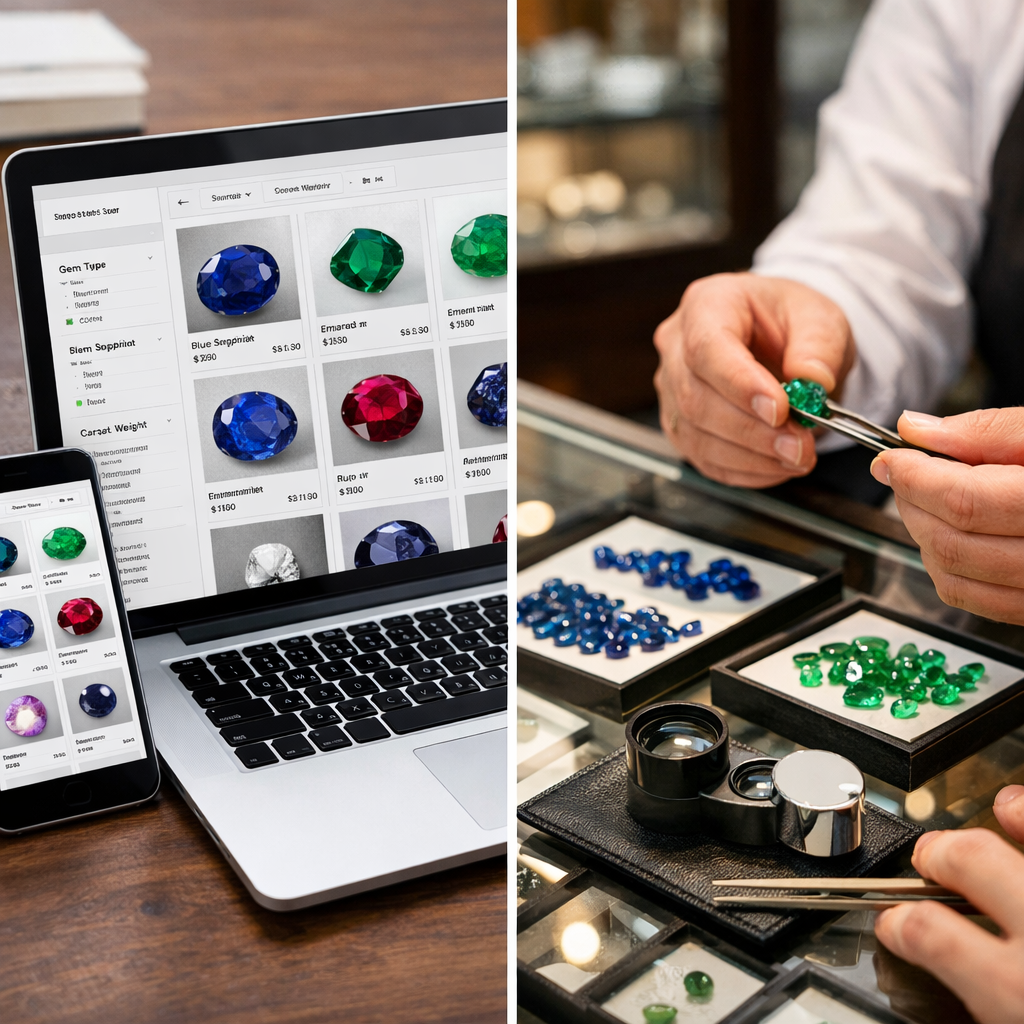
Finding the best place to buy gemstones comes down to fit: where you’ll get the right selection, verification, aftercare, and price for your specific stone, budget, and timeline. Online sellers excel in choice and comparison; local jewelers shine in hands-on evaluation and immediate service. E‑commerce typically offers 24/7 access, broader assortments, and price competition, while stores provide tactile inspection, personal advice, and instant returns or adjustments [1]. Below, Jewelry Guidebook breaks down both paths—plus marketplaces, gem shows, and auctions—so you can choose confidently, today.
How to choose where to buy gemstones
Best place to buy gemstones means the channel that aligns with your priorities across selection, verification, aftercare, and price—matched to your timeline. For some, that’s a specialist e‑retailer; for others, a trusted local jeweler. Often, the smartest route is hybrid: research online, verify in person. That’s the approach Jewelry Guidebook generally recommends for higher‑value stones.
Online trade‑offs: 24/7 convenience, far broader selection, and often lower prices due to head‑to‑head competition [1]. Decisions rely on imagery, certifications, and reviews.
Local trade‑offs: hands‑on color assessment, in‑person testing, expert guidance, and immediate returns or turnarounds—ideal when speed, sensory validation, or custom work matter [1].
Gemstone certification (40–50 words): A gemstone certification is an independent laboratory report describing identity, weight, measurements, and quality factors such as color and clarity, plus any treatments. It is not a valuation; it’s a scientific identification. Well‑known labs include GIA, AGL, and IGI. Use reports to verify authenticity and compare stones objectively.
Comparison criteria that matter
- Selection and price transparency: Why it matters—more options and competitive pricing raise your odds of finding the right stone at the right price. How to check—compare multiple listings side‑by‑side; e‑commerce typically has broader assortments and lower prices from competition [1].
- Sensory validation: Why it matters—color and cut performance are best judged in person. How to check—request in‑store viewing with neutral lighting and tools; online, rely on high‑res photos, 360° video, and lab reports [1].
- Reviews and reputation: Why it matters—social proof predicts service quality. How to check—look for consistent, recent reviews; 93% say reviews influence purchases, and shoppers often read around 10 reviews and weigh star ratings [2, 3].
Return policy (short definition): A return policy explains if and how you can send an item back, including the time window, condition rules, fees, and refund method. Expect shipping‑based online returns to take longer; in‑store returns are typically immediate [1].
Online gemstone retailers
Online excels at breadth, convenience, and transparent price comparison—often at lower costs thanks to heightened competition [1]. To shop confidently, vet sellers with verified reviews and use structured comparison tools. In surveys, 84% of consumers trust online reviews as much as personal recommendations, and verified‑shopper reviews drive stronger sales impact [4, 3]. Comparison tools help evaluate features, prices, and benefits side‑by‑side so you can shortlist faster [6]. Use this Jewelry Guidebook guide as a simple checklist as you compare.
Selection and pricing online
E‑commerce typically offers broader selection and often lower prices because many sellers compete on the same page or platform [1]. Use filters (stone type, color, origin, treatments, dimensions), compare listings in parallel, and save a shortlist to focus on best value.
Mini‑comparison: marketplace vs. specialized retailer
| Factor | Broad marketplace | Specialized online retailer |
|---|---|---|
| Selection depth | Vast, mixed quality | Curated, focused on specific categories |
| Imagery quality | Variable; some stock photos | Consistent high‑res and 360° where offered |
| Quality control | Varies by seller | Stricter vetting and standardized info |
Imaging, certification and transparency online
Insist on high‑resolution photos, 360° video, and third‑party lab certificates (e.g., GIA, AGL, IGI). Online decisions hinge on imagery, certifications, and reviews more than on touch and feel [1]. Jewelry Guidebook favors third‑party reports with explicit treatment comments and complete measurements.
Treatment disclosure (short definition): Treatment disclosure is a seller’s written statement of any enhancements—such as heat, fracture filling, or diffusion—including the method and its permanence. It enables apples‑to‑apples comparisons and correct pricing. Non‑disclosure is a red flag and may imperil return rights.
Quick reads on lab reports: Confirm identity (species/variety), measurements and weight, color/clarity notes if applicable, treatment comments, and any special remarks that affect durability or care.
Service, shipping and returns online
Expect efficient but often chat‑based service. Returns require shipping and can take longer to resolve; local returns are usually immediate [1]. Strong review signals matter: about half of shoppers visit a seller’s site after positive reviews, and reviews can lift sales by roughly 18%—useful proxies for service quality [4].
Before you buy, check:
- Return window length and start date (delivery vs. order)
- Restocking fees or resizing exclusions
- Insured shipping both ways and RMA process
- Policies for setting, resizing, and workmanship warranties
When online is the better choice
- You need niche sizes, origins, or colors quickly—24/7 access and vast selection help [1].
- You leverage verified reviews and side‑by‑side price comparisons to save money [4, 6].
- You’re comfortable validating with certificates, photos/video, and a clear return policy instead of in‑person inspection.
Local jewelers and brick and mortar
The core value of local jewelers is tactile evaluation and expert, personal guidance. You can handle the stone, judge color and cut in varied lighting, and get on‑the‑spot tests, adjustments, or repairs. If speed or instant fulfillment matters, in‑store has the edge [1].
Hands-on evaluation and expert guidance
Ask to view with a loupe or microscope and under daylight‑equivalent lighting. Where appropriate, request simple tests (e.g., refractometer) and side‑by‑side comparisons. For high‑value or complex gemstones, in‑person demos and expert advice reduce risk and speed decisions [1]. Bring Jewelry Guidebook’s mini‑checklist: identity, visible inclusions, color zoning, written treatment disclosure, and lab report verification.
Custom work, repairs and aftercare
Local shops excel at custom settings, sizing, and quick repairs; returns and adjustments are typically immediate [1]. Ask about warranties, cleaning schedules, and same‑day services for common tweaks. Check local shop reviews—82% read online reviews for local businesses, and Google is the top review site [5, 2].
In-store pricing, negotiation and turnaround
Request at least three itemized quotes that separate the stone, setting, labor, and aftercare to reveal trade‑offs. Many stores have more pricing flexibility than posted online rates. If your deadline is tight, immediate possession and on‑the‑spot adjustments can be decisive [1].
When local is the better choice
- You need hands‑on color evaluation or to verify complex treatments in person [1].
- You want immediate service, on‑the‑spot adjustments, or a short‑deadline gift [1].
- Expert, personalized advice will shape a complex or high‑value purchase.
Other buying venues to consider
- Large marketplaces: immense selection and price competition, but variable quality control [1].
- Specialized online retailers: curated inventories with certificates and magnified imagery.
- Local independents: hands‑on inspection, personal service, and quick aftercare.
- Gem shows/estate dealers: unique or rare finds; requires expertise to assess provenance.
- Auctions/consignment: potential bargains and rarities but higher risk and variable returns.
Large marketplaces
Use filters for “verified” or “certified” listings and scrutinize seller ratings; consumers weigh star ratings and often read around 10 reviews before deciding [3]. Buyer protection (short definition): a marketplace program that refunds or replaces an item not as described within set timelines—eligibility usually requires approved payment methods and using platform messaging. Because quality control varies, insist on third‑party lab reports and clear return rules before bidding or buying.
Gem shows and estate dealers
Bring a loupe, check ID/trade credentials, and request lab reports or on‑site testing. Estate pieces may include provenance—ask for documentation. Pay with methods that preserve dispute rights and request written treatment disclosures. Mini‑checklist: confirm identity/treatments; verify measurements/weights; assess wear/repairs; understand any final‑sale terms.
Auctions and consignment
Opportunities include rare stones and favorable pricing—risks include limited returns and buyer’s premiums. Read condition reports, presale estimates, reserves, all fees, and return allowances carefully. Set a hard ceiling bid and arrange immediate post‑purchase appraisal and verification.
Side-by-side comparison summary
| Dimension | Online retailers | Local jewelers |
|---|---|---|
| Price | Often lower due to direct competition [1] | May negotiate; bundled service value |
| Selection | Broadest assortment, niche options [1] | Curated, limited but hand‑picked |
| Trust/sensory | Relies on imagery, certifications, reviews [1] | Touch, tests, and expert guidance in person [1] |
| Returns | Shipping required; slower resolutions [1] | Typically immediate in‑store |
| Speed | Fast ordering; shipping time applies [1] | Instant possession and on‑the‑spot adjustments [1] |
| Service | Chat/email centric; scheduled consults | Personal, relationship‑based support |
Best of both: research and price‑compare online, then verify in person when feasible; buy online, pick up in store (BOPIS) where available [1]. Jewelry Guidebook often recommends this hybrid path.
Ethical sourcing and treatment disclosure
Ethical sourcing (short definition): a supply chain that minimizes harm and supports fair labor, community welfare, and environmental standards, with documented origin and handling. Favor sellers that publish sourcing policies and provide traceability or third‑party assurance.
Always request written treatment disclosure with notes on permanence. Non‑disclosure is a deal‑breaker.
Common treatments and impacts:
- Heat: common for sapphire/ruby; typically stable; affects price.
- Fracture filling: fills cracks; can reduce durability; requires gentle care; lowers price.
- Diffusion: surface‑adds color; may be less permanent; significant price impact and care needs.
Practical buying checklist
Use this Jewelry Guidebook checklist to stay organized.
- Define stone type, size, budget, and deadline.
- Choose your channel (online/local) based on selection needs and whether you require hands‑on validation.
- Vet seller reputation via reviews; 84% trust online reviews like personal recommendations [4].
- Shortlist 3–5 stones; compare specs, imagery, certification status, and price side‑by‑side.
- Demand third‑party certificates and written treatment disclosure.
- Confirm return/refund terms; shipping returns are typically slower than in‑store [1].
- For high‑value items, arrange an independent appraisal.
- Finalize payment with buyer protections; insure shipping when applicable.
- On receipt, inspect under neutral light and act within the return window.
Independent appraisal (short definition): a written, unbiased valuation by a qualified professional who did not sell you the item. It documents characteristics, quality, and replacement value for insurance or resale—and confirms your gem matches its lab report.
Recommendation by use case and budget
- Under $500 gift: online specialized retailers or reputable marketplaces with free returns; prioritize certificates and clear, magnified photos.
- $500–$3,000 colored stone for a ring: start online for selection; verify locally or via independent appraisal before setting.
- $3,000+ fine gemstone or complex treatment: favor local jewelers for hands‑on evaluation and custom work; or a hybrid—reserve online and inspect in store or via BOPIS where offered [1].
- In all cases, Jewelry Guidebook suggests using comparison tools to benchmark features, pricing, and benefits before negotiating or purchasing [6].
Frequently asked questions
Are gemstones cheaper online or in a store
Online is often cheaper because competition drives prices, but factor shipping and return timelines. Jewelry Guidebook recommends weighing any local negotiation and immediate service against total online cost.
How do I verify authenticity when buying online
Buy only with third‑party lab certificates and high‑resolution images or 360° video. Jewelry Guidebook also advises confirming a clear return policy and getting an independent appraisal right after delivery.
What certifications should I look for
Prioritize reports from established labs such as GIA, AGL, or IGI. Jewelry Guidebook looks for identity, measurements, color/clarity notes, and explicit treatment comments on the report.
What are red flags when buying gemstones on marketplaces
No third‑party certificate, vague or missing treatment disclosure, poor or stock images only, inconsistent seller reviews, and unclear return policies are warning signs. Jewelry Guidebook flags these as warning signs.
Should I get an independent appraisal after purchase
Yes—especially for higher‑value stones or complex treatments; Jewelry Guidebook recommends it. An independent appraisal verifies the gem matches its report and documents value for insurance.