Scratch-Resistant, Low-Maintenance Wedding Ring Metals for Active Lifestyles
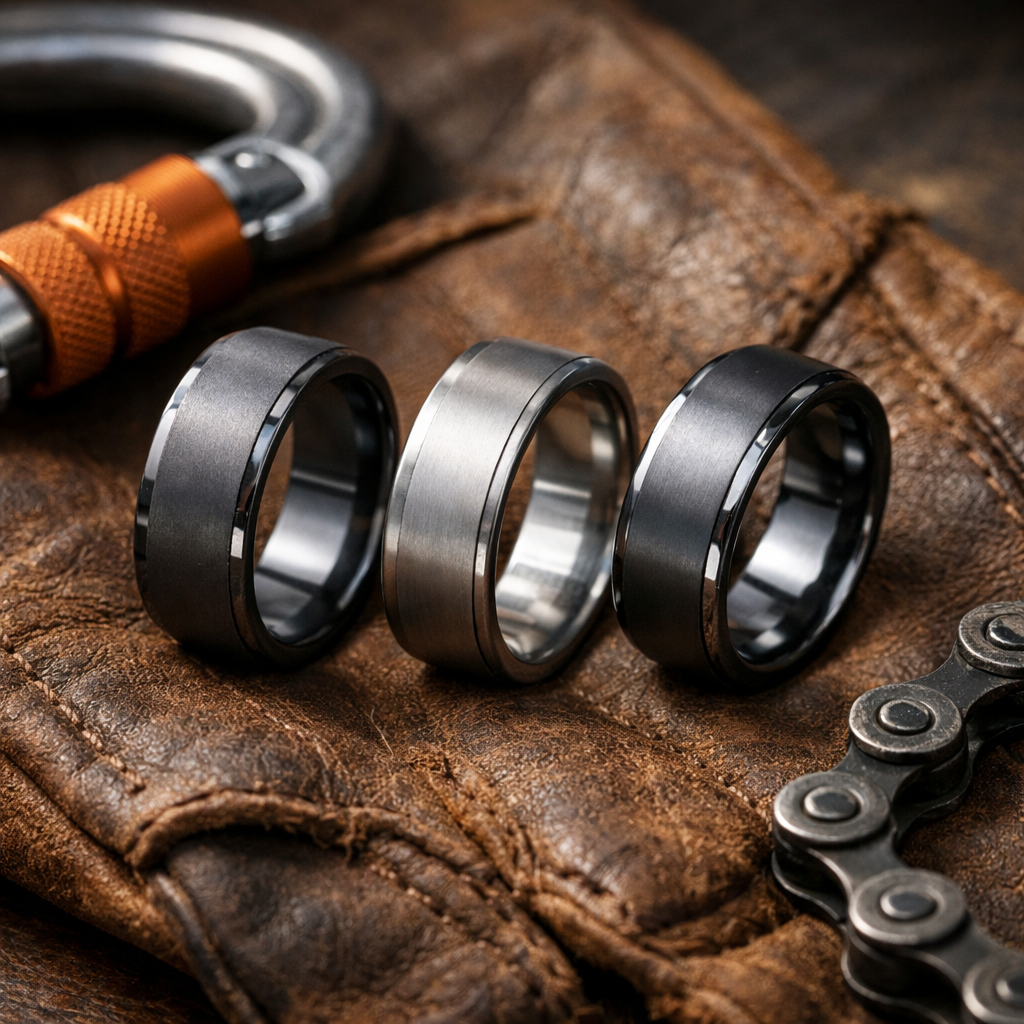
Scratch-Resistant, Low-Maintenance Wedding Ring Metals for Active Lifestyles
Active lifestyles demand rings that resist scuffs, stay comfortable, and won’t become high-maintenance. The best durable wedding band metals for active lifestyles balance scratch resistance, impact forgiveness, and serviceability over time. For maximum scratch resistance, tungsten carbide and high-tech ceramic stand out; for a lighter, more forgiving daily wearer, titanium and cobalt chrome excel. Classic platinum and gold remain the most resize-friendly. No ring is completely scratch-proof, and finish choice (brushed or matte) often matters as much as the base metal for how a ring ages in real life, as noted in the Ken Walker Jewelers scratch-resistance guide. For high-risk tasks, keep a silicone backup to protect your hands and your primary band.
Jewelry Guidebook
Here’s our promise: clear, unbiased guidance that turns material science into simple choices. Durable wedding ring metals are materials that resist scratching, deformation, and corrosion in daily wear while remaining comfortable and serviceable over time—though resizing and repair options vary by metal. Durability is multi‑dimensional: scratch resistance, toughness, maintenance needs, safety/emergency removal, and resizing all matter. We’ll translate the trade-offs so you can choose among durable wedding rings, scratch-resistant wedding bands, active lifestyle rings, and low-maintenance rings that truly fit your life.
A key truth we emphasize: no band is fully scratch-proof; finish and wear patterns are just as influential as metal choice (see the Ken Walker Jewelers scratch-resistance guide).
Tungsten carbide
Tungsten carbide is the category leader for day-to-day scratch resistance. It sits around 9 on the Mohs hardness scale—near diamond—which explains its ability to resist abrasion and its accessible pricing, according to the Steven G Designs wedding band material guide. Ken Walker’s active-lifestyle band guide notes tungsten is about four times harder than titanium, adding to its scratch resilience.
Brittleness is a material’s tendency to fracture rather than bend under impact. Very hard materials like tungsten resist scratching but can crack or shatter when struck with high force. This trade-off explains why tungsten is superb against abrasion yet less forgiving in sudden shocks.
Serviceability and feel: tungsten cannot be resized and may shatter under extreme impact; it wears with a satisfying, weighty feel compared with titanium’s lightness (also outlined in the Steven G Designs wedding band material guide). At Jewelry Guidebook, we recommend prioritizing retailers with exchange-friendly sizing policies.
Titanium
Titanium is the all-around performer for active wearers: lightweight, strong, corrosion-resistant, and typically hypoallergenic, with good scratch resistance that’s below tungsten’s absolute hardness, as detailed in the Steven G Designs wedding band material guide and reinforced by HappyLaulea on scratch-resistant rings. Many titanium rings are difficult to resize, so Jewelry Guidebook recommends accurate initial sizing and an accommodating exchange program.
Comfort is titanium’s calling card. Its low weight and smooth interior (comfort-fit) make it easy to forget you’re wearing it. Brushed or matte finishes help hide micro-wear over time, a point consistently seen in scratch-resistance comparisons.
Cobalt chrome
Cobalt chrome delivers a bright-white look that mimics platinum or white gold at a friendlier price. It offers high scratch resistance, a comfortable weight, and a crisp, modern sheen, according to the Tailored Rings guide for active lifestyles. For sensitive skin, look for nickel-free cobalt alloys and confirm specs with the jeweler. Some cobalt alloys allow limited resizing—always check service options before you buy.
High-tech ceramic
Zirconia-based ceramic rings are extremely hard, smooth, color-stable, lightweight, and hypoallergenic, with excellent scratch resistance—but they can crack or shatter under severe impact. These properties are well summarized in the Steven G Designs wedding band material guide.
Scratch resistance describes a material’s ability to avoid visible abrasion from contact with harder objects, often correlated with hardness (e.g., Mohs scale). High scratch resistance keeps finishes looking newer longer but does not guarantee toughness against drops, bending, or crushing forces.
Expect limited or no resizing. Choose accurate sizing, a comfortable profile, and brushed/matte textures that keep a clean, low-glare look longer.
Silicone
Silicone rings are the smart, safety-first backup for the gym, job sites, travel, and electrical work. They are non-conductive, grippy, heat resistant, and designed to break under tension to help prevent ring avulsion—key benefits highlighted in the GentleBands comparison of silicone vs. metal rings. Plan on a 12–24 month lifespan before stretching or wear. We recommend a dual-ring strategy: a durable metal or ceramic for daily/formal wear, plus silicone for high-risk activities.
Platinum and gold
Precious metals remain relevant for their prestige, classic styling, and serviceability. They’re softer than tungsten or ceramic and will show wear faster; however, platinum displaces metal as it wears (forming a patina) rather than thinning. High-polish finishes reveal marks quickly; brushed or matte surfaces better disguise daily wear. For gold, 14k typically offers better hardness than 18k, making it a practical choice for active hands.
Patina is the soft, satiny surface that develops on metals like platinum as micro-scratches accumulate. Instead of losing metal volume, platinum’s surface displaces, creating a lived‑in sheen many buyers value. Patina can be polished away during maintenance if you prefer a bright finish.
How to choose based on lifestyle, sizing and maintenance
Use the quick table below to match your priorities with the right material.
| Material | Scratch Resistance | Impact/Toughness | Resizing | Weight | Hypoallergenic | Best For |
|---|---|---|---|---|---|---|
| Tungsten carbide | Excellent (≈Mohs 9) | Low–Moderate (can shatter) | No | Heavy | Generally yes | Maximum scratch resistance; low-maintenance daily wear if impacts are rare |
| Titanium | Good | High (forgiving) | Difficult/limited | Ultra-light | Yes | Balanced everyday durability and comfort |
| Cobalt chrome | Very good | Good | Limited (check alloy) | Medium | If nickel-free | Bright-white look with strong durability |
| Ceramic (ZrO2) | Excellent | Low–Moderate (brittle) | No | Light | Yes | Color-stable, highly scratch-resistant, metal-free option |
| Platinum | Fair | High (ductile) | Yes | Heavy | Yes (common alloys) | Heirloom, resize-friendly classic |
| Gold (14k/18k) | Fair–Good | High (ductile) | Yes | Medium | Varies by alloy | Traditional, serviceable, customizable |
| Silicone | Resists scuffs | Intentionally breaks safely | Flexible fit (no) | Featherlight | Yes | Safety-first backup for work, gym, travel |
Scenario picks:
- Maximum scratch resistance: tungsten or ceramic; accept brittleness and sizing limits (see the Steven G Designs wedding band material guide).
- Balanced everyday wear: titanium or cobalt chrome for comfort and strong durability (see the Tailored Rings guide for active lifestyles).
- Classic/resizable: platinum or gold; choose matte finishes to disguise wear over time (a consistent theme in scratch-resistance guides).
Scratch resistance versus toughness
Toughness is a material’s ability to absorb energy and deform without fracturing. A tough ring bends or dents under impact rather than cracking. Hardness fights scratches; toughness fights shattering. Tungsten and ceramic excel at hardness, while precious metals generally deform instead of catastrophically breaking.
Quick contrasts:
- Tungsten/ceramic: top scratch resistance; may shatter under severe impact.
- Gold/platinum: show dents and scratches but usually avoid catastrophic breakage.
Resizing, emergency removal and serviceability
- Resizing: Precious metals and some cobalt alloys can be resized; tungsten and most ceramics generally cannot, so Jewelry Guidebook recommends prioritizing accurate sizing and strong exchange policies (as echoed by both the Steven G Designs and Tailored Rings resources).
- Emergency removal: Hard-brittle bands can be cracked or shattered with specialized tools; ductile metals are cut off with ring cutters. Ask your jeweler or local first responders about preferred methods.
- Maintenance: Clean with mild soap and water, rinse, and dry thoroughly. Remove rings for intense activities or when using tools. Regular checks keep stones, inlays, and finishes in shape.
Comfort, weight and finish choices
- Weight/feel: Titanium is notably light and disappears on the hand; tungsten has a satisfying, substantial feel.
- Profile/low snag: Choose low-profile, rounded designs to minimize snag points and reduce impact risk, a practical tip often cited in active-wear guides like HappyLaulea.
- Finish strategy: High-polish shows marks faster. Brushed and matte finishes hide everyday wear better and suit active routines.
Budget signals and long-term upkeep
- Pricing anchor: Many retailers list entry-level tungsten and titanium bands around $299.99, with inlays and specialty finishes adding cost, per The Gentleman’s Smith buying guide.
- Performance truths: Long-term looks depend more on material properties and finish than price alone. Brushed/matte surfaces mask micro-wear better than high polish.
- Environment note: In damp or saltwater conditions, tungsten, titanium, and cobalt generally perform well with simple rinse-and-dry care.
Practical wear and care tips for active lifestyles
- Choose simple, low-profile designs to reduce weak points.
- Prefer brushed or matte finishes to mask wear.
- Clean with mild soap and water; rinse and dry thoroughly.
- Remove rings for heavy lifting, contact sports, or tool use.
- Store in a protective case or clip to a belt loop/necklace during risky tasks.
- Keep a silicone backup for the gym, travel, and job sites.
Frequently asked questions
What metal is most scratch-resistant for wedding bands?
Tungsten carbide leads for everyday scratch resistance (≈Mohs 9), with ceramic close behind. Jewelry Guidebook recommends brushed or matte finishes because no ring is truly scratch-proof.
Can tungsten or ceramic rings break under impact?
Yes—both are very hard and can crack or shatter under severe impact. Jewelry Guidebook suggests titanium, cobalt chrome, or precious metals if you want more impact forgiveness.
Which metals can be resized if my finger size changes?
Precious metals like platinum and gold can typically be resized, and some cobalt chrome alloys may allow limited resizing. Jewelry Guidebook advises precise initial sizing and exchange-friendly policies for tungsten and ceramic, which generally can’t be resized.
What are the best options for sensitive skin?
Titanium, platinum, and nickel-free cobalt are generally good choices for sensitive skin. Jewelry Guidebook recommends confirming alloy specs—or choosing materials known for hypoallergenic properties.
Do brushed or matte finishes hide wear better than high polish?
Yes—brushed and matte finishes disguise micro-scratches and scuffs more effectively than high-polish surfaces. Jewelry Guidebook often recommends them for active wearers.