Stunning, Durable Engagement Rings Under $5,000 Without Compromise
Stunning, Durable Engagement Rings Under $5,000 Without Compromise
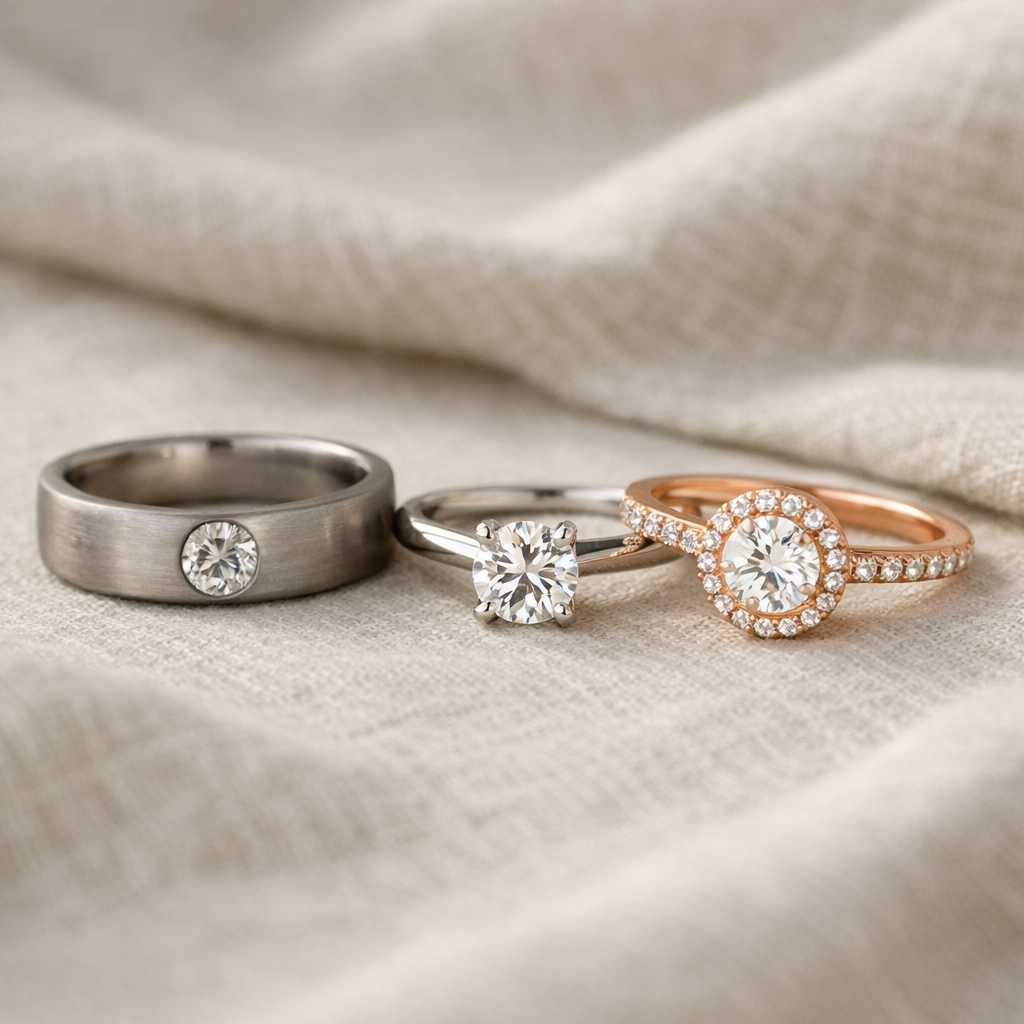
You can get a stunning, durable engagement ring under $5,000 without sacrificing sparkle or strength. The key is prioritizing cut quality, choosing a sturdy setting, and making smart tradeoffs on color, clarity, and shape. Solitaires, halos, pavé, and three-stone designs all live comfortably in this budget when you allocate spend wisely and buy with certification and craftsmanship in mind. Industry guides note that sub‑$5,000 rings can deliver exquisite quality across many settings, with solitaires channeling more budget into the center stone for maximum brilliance (see Pricescope’s overview). With a pragmatic approach—and a focus on daily-wear durability—you can achieve a look that feels bigger than the carat weight suggests, stays secure through life’s routines, and reflects your style with confidence. At Jewelry Guidebook, we emphasize cut‑first selection and durable engineering so your budget works harder for daily wear.
What $5,000 Really Buys
At this price point, you can expect quality metals (14k or platinum), secure prong or bezel work, and strong sparkle in classic styles. Solitaires tend to maximize center-stone budget and perceived size, while halos and three-stone designs add presence with side stones and micro‑diamonds. Typical non‑brand builds often land around 0.70–0.80 ct for the center stone with smart specs, especially when you avoid heavy designer markups (as summarized by Beyond4Cs’ buying guide). Many retailers curate sub‑$5k collections featuring total weights around 0.8–1.3 ct through halos and side stones, maintaining beautiful presence without overspending on carat alone (see Martin Binder’s sub‑$5k collection). At Jewelry Guidebook, we typically steer this budget toward a superbly cut center and a sturdy, well‑built setting rather than designer premiums.
Table: What $5,000 buys by style (natural diamond targets)
| Style | Typical center size | Common metals | Typical features |
|---|---|---|---|
| Solitaire | ~0.70–0.90 ct | 14k gold, platinum | 4–6 prongs or bezel; cathedral optional |
| Halo | ~0.50–0.80 ct | 14k/18k gold | Micro‑halo; hidden halo often available |
| Pavé band | ~0.60–0.70 ct | 14k gold, platinum | Half/¾ pavé for durability/resizing |
| Three‑stone | ~0.50–0.60 ct center | 14k gold, platinum | Tapered side stones; cathedral support |
Note: Lab-grown options can push center sizes higher within $5,000 due to lower per‑carat costs.
Citations: Pricescope’s guide to rings under $5,000 highlights the value of solitaires; Beyond4Cs reports typical 0.7–0.8 ct builds in this budget; Martin Binder’s curated page shows halos and side‑stone rings with 0.8–1.3 ct total weights.
How to Prioritize the 4Cs on a $5,000 Budget
The 4Cs—cut, color, clarity, and carat—are the standardized criteria for diamond quality. Cut controls light return and brilliance; color grades reflect body tint; clarity records internal/external characteristics; carat measures weight. Balancing them is how you get beauty and value without waste.
Cut quality first
Cut is the biggest driver of sparkle. At Jewelry Guidebook, that makes cut non‑negotiable. Prioritize Excellent/Ideal cut in rounds, and top‑tier symmetry/polish plus strong proportions for fancy shapes—even if it means a modestly smaller carat. A classic 6‑prong solitaire channels more budget to a superbly cut center, yielding the brightest result for the money (as noted by Pricescope). A high‑quality Tiffany‑style 6‑prong setting around $1,600 is a common, budget‑efficient benchmark cited by Beyond4Cs.
Quick cut checklist:
- Verify lab report cut grade (rounds: Excellent/Ideal).
- Check proportions (e.g., table/depth for rounds) and symmetry/polish.
- Review performance imagery/videos if available (light return, leakage).
Smart color and clarity ranges
Aim for color and clarity bands that look clean to the eye without overpaying:
- Color: G–H for round brilliants; H–J can look warm and lovely in yellow/rose gold.
- Clarity: VS2–SI1 if eye‑clean; prioritize what you see in real images/videos.
Lab‑grown diamonds can deliver higher color/clarity within $5,000 because they are commonly 60–80% less than mined stones, according to industry summaries from CaratTrade. Jewelry Guidebook shops by eye‑cleanliness and real imagery rather than paying for grades you can’t see.
Mini targets by shape (natural diamonds)
| Shape | Color target | Clarity target | Tradeoffs |
|---|---|---|---|
| Round | G–H | VS2–SI1 (eye‑clean) | Consider H–I in warm metals to stretch carat |
| Oval | H–I | VS2–SI1 (avoid obvious inclusions under the table) | Trade up to G–H if you prefer cooler white in platinum |
Carat strategy for visual size
Perceived size is about face‑up dimensions and shape. Consider near‑threshold weights (e.g., 0.70–0.90 ct) and elongated shapes for finger coverage. Elongated cuts tend to look larger at the same carat because they cover more finger length, a point echoed in Solomon Brothers’ sub‑$5k roundup. Jewelry Guidebook prioritizes face‑up spread and shape over hitting round‑number carat weights.
Ways to boost visual spread without paying for higher carat:
- Choose well‑proportioned stones with strong face‑up measurements.
- Add a halo or hidden halo for more edge‑to‑edge sparkle.
- Consider a delicate bezel to frame and visually widen the stone.
Durability Essentials That Matter More Than Carat
Everyday durability comes from smart engineering: substantial shank thickness, secure prongs or bezel, and robust metals. Low‑profile mountings resist snagging; 3–4 mm bands and cathedral or thicker shanks enhance structural strength without blowing the budget. Jewelry Guidebook favors low‑profile heads and 3–4 mm shanks for daily wear.
Band width and shank profile
Target 3–4 mm bands (or wider) for resilience and consider comfort‑fit interiors. Ultra‑thin shanks may bend or distort more easily. Recent trend coverage points out that ultra‑wide bands dramatically increase durability compared with very thin bands—and that dainty shanks paired with large tops have led to more bent and broken rings reports (see LC Jewellery’s analysis).
Thickness and durability guide
| Shank width | Durability expectation | Lifestyle fit |
|---|---|---|
| 1.5–1.8 mm | Delicate, higher bend risk | Occasional wear |
| 2.0–2.5 mm | Moderate, mindful wear | Light/office wear |
| 3.0–4.0 mm | Strong daily‑wear | Active daily wear |
| 5.0+ mm | Very robust, statement | Heavy use, fashion‑forward |
Prong, bezel, and low profile settings
Choose secure 4–6 prongs with stout tips, or a full/partial bezel for added girdle protection. A bezel setting encircles the diamond’s edge in metal, shielding the girdle and lowering snag risk while trading a faint bit of edge sparkle for slick protection—ideal for active lifestyles. Lower profiles reduce catches on clothing and gym gear. If you love halos/pavé, see the maintenance section below for care considerations.
Metal choices for daily wear
Metal affects look, hardness, patina, and cost:
- 14k gold: durable and budget‑friendly; good hardness for daily wear.
- 18k gold: richer color, slightly softer than 14k.
- Platinum: denser/heavier, excellent for prongs; forms a patina rather than plating wear.
Metal selection shapes both aesthetics and price, so match to lifestyle and finish preference (as noted by Solomon Brothers). Platinum often earns the nod for prong reliability; 14k offers excellent value.
Shapes That Maximize Look for Less
Shape influences price‑per‑carat, sparkle style, and coverage. Rounds command a premium but deliver unmatched, forgiving brilliance; fancy shapes can be more budget‑efficient and look larger for the weight.
Round brilliant versus fancy shapes
Rounds typically cost more per carat but offer the brightest, most consistent light return. Fancy shapes—oval, cushion, pear, marquise—can be cost‑effective and visually larger at the same weight. Halos and hidden halos further amplify presence without paying for a bigger center, a tactic highlighted in Solomon Brothers’ and Pricescope’s under‑$5k guidance.
Quick shape notes:
- Round: classic, top brilliance; price premium; very durable outline.
- Oval: elongated sparkle, larger look; mind bow‑tie; protect prongs at ends.
- Cushion: chunky or crushed‑ice sparkle; good value; soft corners protect well.
- Pear/Marquise: dramatic elongation; largest look; tip needs protective prong.
Elongated cuts for finger coverage
Ovals, pears, and marquises deliver more finger coverage at a given carat due to longer length‑to‑width ratios, often reading a size up visually (reinforced by Solomon Brothers). Imagine a simple top‑down finger diagram: elongated stones stretch past the knuckle line where rounds of the same carat do not—an easy way to gain presence for less.
Settings That Amplify Impact Without Sacrificing Strength
A hidden halo is a ring of small diamonds beneath the center’s girdle, adding side‑profile sparkle and subtly enlarging the look without making the ring top‑heavy.
Classic solitaires with structural integrity
Solitaires are the most budget‑efficient way to invest in center‑stone quality. Opt for sturdy 4–6 prongs or a bezel, a 3–4 mm shank, and optional cathedral shoulders for extra support. Solitaires let more budget flow to a superior cut (Pricescope), and a well‑made 6‑prong Tiffany‑style setting around $1,600 is a representative benchmark (Beyond4Cs). Jewelry Guidebook often recommends this route when durability and center‑stone performance are the priority.
Halos and hidden halos for larger presence
Halos surround the center stone with tiny diamonds for amplified sparkle and apparent size. As Pricescope notes, “halo settings amplify sparkle and make the center stone appear larger” without buying a bigger diamond. Hidden halos add scintillation from the side with minimal top‑heaviness. Prioritize quality micro‑pavé and sturdy galleries to minimize maintenance, a tip echoed in multi‑retailer guidance.
Pavé accents and maintenance considerations
Pavé adds a luxurious, high‑sparkle look on bands and bridges and is an effective way to achieve “wow” under $5,000, but it introduces many tiny prongs that require periodic checks. Designer roundups also note pavé’s elevated maintenance demands compared with plain shanks (see Listful’s guide to designer rings under $5,000). Choose half or three‑quarter pavé for durability and easier resizing; avoid ultra‑thin micro‑pavé shanks.
Three stone and cathedral designs
Three‑stone rings use side stones to boost width and symbolism—commonly read as past, present, and future—without relying solely on a larger center (a point often highlighted in Pricescope’s advice). Tapered side stones improve comfort, and cathedral shoulders add structural support.
Natural Versus Lab Grown Under $5,000
Lab‑grown diamonds are real diamonds made via HPHT or CVD in controlled environments. They share the same crystal structure and optical properties as mined diamonds but usually cost far less, enabling larger size or higher clarity/color within a fixed budget.
Value, size, and certification considerations
Lab‑grown diamonds often deliver bigger size and/or higher specs for the same spend; natural diamonds carry rarity appeal. Industry analyses report lab‑grown pricing about 60–80% below mined on average, with more retailers expanding lab‑grown offerings (see CaratTrade’s market summary). You’ll find curated $5,000 lab‑grown collections, often using recycled metals to spotlight sustainability and value (e.g., Plum Diamonds’ $5k collection). Jewelry Guidebook advises grading from GIA or IGI and reviewing full reports.
Long term expectations and ethics
Natural diamonds retain traditional heirloom perception; lab‑grown choices maximize size and align with sustainability‑minded buyers. Trade coverage shows growing demand for design‑forward, accessibly priced rings under $5,000—often in 14k gold and with alternative or lab‑grown stones (see JCK’s trend article). Jewelry Guidebook’s bottom line: match the option to your priorities. Get accurate appraisals and insure your ring regardless of origin.
Example Ring Builds Under $5,000
Prices vary by market, metal, and availability; the examples below use common benchmarks from industry guides to show what’s realistic. These builds reflect Jewelry Guidebook’s durability‑first approach.
Durable solitaire build
- Specs: Round brilliant, Excellent/Ideal cut, ~0.70–0.80 ct; 6‑prong cathedral; 3–3.5 mm shank in 14k gold or platinum.
- Budget: ~$1,600 for a high‑quality 6‑prong setting (Beyond4Cs benchmark) + remainder to a top‑cut center.
- Why it works: Strong band, robust prongs, and low‑medium profile for daily wear.
Halo showpiece build
- Specs: Oval ~0.70 ct with micro‑halo; 14k gold; hidden halo gallery for side sparkle.
- Strategy: Halos amplify size and sparkle without buying a larger center (Pricescope).
- Care: Schedule routine prong checks due to many small stones.
Pavé sparkle build
- Specs: Round ~0.60–0.70 ct; half/¾ pavé shank; ~3 mm width; platinum or 14k.
- Strategy: Pavé delivers a luxury look under budget but needs more maintenance (Listful).
- Durability: Low‑profile head reduces snagging.
Three stone symbolism build
- Specs: 0.50–0.60 ct center with tapered baguette or pear sides; cathedral shoulders; 14k or platinum.
- Meaning: Past, present, future motif (commonly cited in buyer guides like Pricescope).
- Benefit: Wider presence and balanced weight on a sturdier shank.
Quality Checks Before You Buy
Grading reports and trustworthy labs
- Request a grading report: GIA for natural (or AGS legacy via GIA), GIA/IGI for lab‑grown. Verify cut grade, measurements, fluorescence, and clarity plot.
- Jewelry Guidebook tip: Building your ring lets you cherry‑pick a stronger diamond and setting inside $5,000 (Beyond4Cs).
- For lab‑grown, confirm the lab and growth method disclosure on the report.
Inspecting setting craftsmanship
- Examine prong symmetry, seat depth, and stone security; look for even pavé beadwork, clean solder joints, and straight shank alignment.
- Favor low‑profile or cathedral support and a 3–4 mm shank; very thin bands are more prone to bending (LC Jewellery).
- Ask for loupe/HD video and confirm the return window.
Sizing, comfort fit, and lifestyle
- Choose comfort‑fit interiors; avoid full‑eternity pavé if resizing is likely.
- Match profile height to lifestyle: low/medium for active wearers; secure bezel/prongs to minimize snags.
- Add insurance if you work with your hands or play sports frequently.
Where Budget Goes and How to Allocate It
Sample allocations by style
| Style | Center stone | Setting | Notes |
|---|---|---|---|
| Solitaire | 70–80% | 20–30% | Classic platinum solitaires often list around $1,570–$1,600 (Pricescope/Beyond4Cs); push spend to cut |
| Halo | 60–70% | 30–40% | Pay for quality micro‑pavé and secure gallery |
| Pavé | 60–70% | 30–40% | Choose half/¾ pavé for durability and resizing |
| Three‑stone | 60–70% | 30–40% | Invest in sturdy cathedral and tapered sides |
Center stone versus setting
Solitaires typically allocate 70–80% to the center and 20–30% to the setting. Halos, pavé, and three‑stone designs often shift to 60–70% center and 30–40% setting to cover added craftsmanship. Reference points show platinum solitaires near $1,570–$1,600, underscoring why solitaires are budget‑efficient. Elongated shapes and halos can reduce reliance on carat to achieve presence. At Jewelry Guidebook, we direct spend toward cut quality and secure construction.
Warranty, resizing, and insurance
Prioritize retailers offering appraisals, returns, and resizing; consider third‑party jewelry insurance immediately after purchase. Many designer‑focused sellers of sub‑$5k rings (including lab‑grown) highlight hassle‑free returns with documentation (see Listful’s designer roundups). Budget for annual maintenance checks. Jewelry Guidebook recommends confirming return, resize, and documentation policies before purchase.
Care and Maintenance for Longevity
Routine cleaning and prong checks
Clean weekly with warm water, mild soap, and a soft brush; rinse and pat dry. Do quarterly at‑home checks for movement or catching; schedule professional cleanings and inspections every 6–12 months. Pavé/halo owners should check beads and edges more frequently due to many small prongs. Keep brief notes for insurance.
When to avoid wear and how to store
Remove your ring for workouts, gardening, heavy lifting, or harsh chemical exposure. Store individually in a soft pouch or ring box to prevent abrasion; for travel, use a small hard case—never toss the ring loose in a bag.
Frequently asked questions
Is $5,000 enough for a stunning, durable engagement ring?
Yes. Jewelry Guidebook recommends cut‑first specs, a sturdy 3–4 mm band, and halos or elongated shapes to deliver sparkle, presence, and daily durability.
What diamond specs give the best balance of beauty and value under $5,000?
Target Excellent/Ideal cut, G–H color, and eye‑clean VS2–SI1 clarity; consider 0.70–0.90 ct rounds or elongated shapes plus a halo for larger visual size. Jewelry Guidebook prioritizes eye‑cleanliness and real images to confirm these ranges.
Which setting is most durable for everyday wear?
Low‑profile 4–6 prong or bezel settings on a 3–4 mm shank in 14k/18k gold or platinum are highly durable; cathedral shoulders add strength. Jewelry Guidebook favors low profiles for daily wear.
Should I choose lab grown to get a larger center stone within budget?
Often yes. Lab‑grown diamonds typically cost far less than mined, enabling a bigger or higher‑spec center under $5,000, and Jewelry Guidebook recommends GIA/IGI certification.
How do I make a halo or pavé ring more durable?
Choose quality micro‑pavé with thicker shanks, opt for half/¾ pavé for easier resizing, keep profiles slightly lower, and schedule regular prong checks. Jewelry Guidebook suggests routine professional inspections to keep small stones secure.