Top Diamond Earring Styles of 2026: From Classic to Trendy
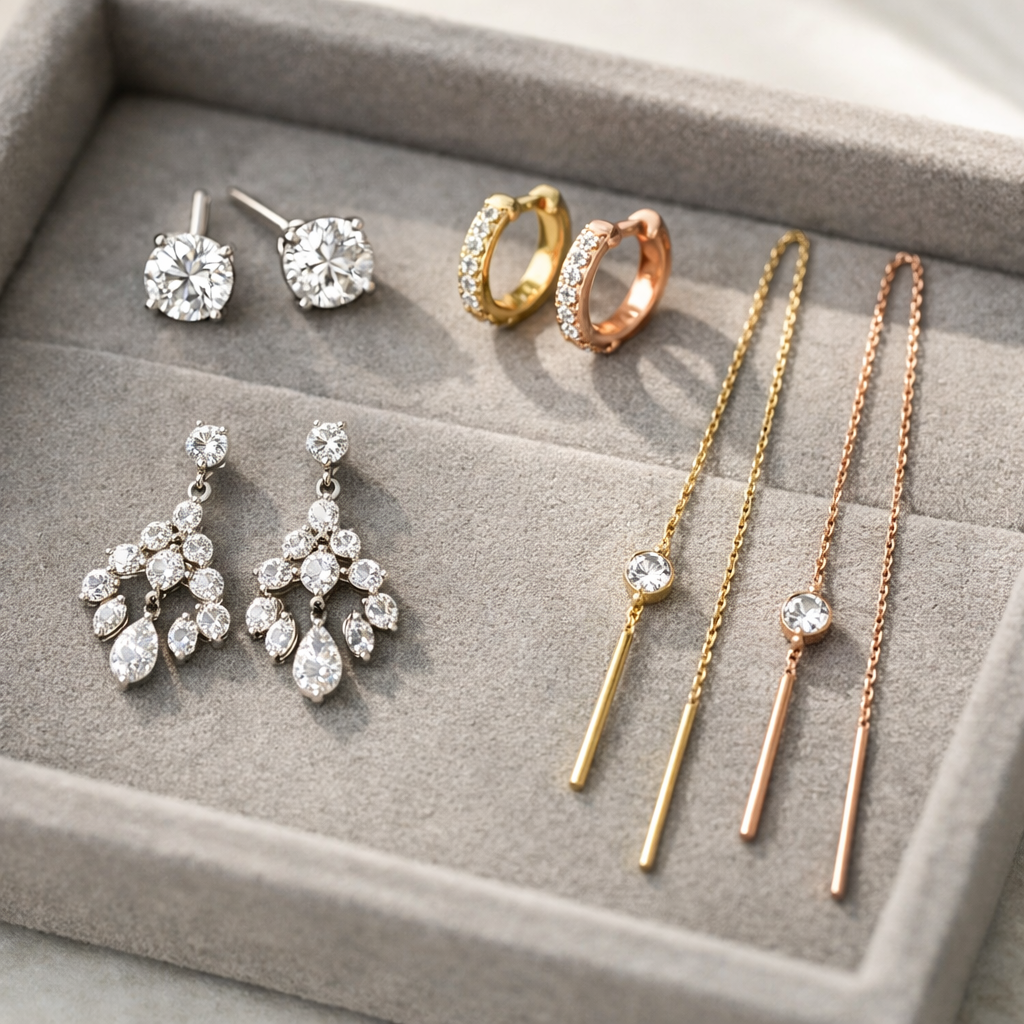
Top Diamond Earring Styles of 2026: From Classic to Trendy
Diamond earrings in 2026 are shaped by two big currents: sleek, minimalist styles for daily wear (think diamond stud earrings, slim hoops, and huggie hoops) and accessible statement looks made possible by lab-grown diamond earrings. At the same time, curated ear stacks—mixing studs, small hoops, and shapes—anchor Gen Z’s jewelry identity. Guides agree that studs, hoops, drops, and clusters comprise the most popular styles of diamond earrings this year, with lightweight comfort and versatility leading the pack Aurika Gems’ 2026 overview and Ouros Jewels’ Gen Z trend report highlighting ear stacks. In this guide, you’ll learn which style fits your wear habits, face shape, and budget—and how to prioritize cut quality and certification with confidence. Jewelry Guidebook emphasizes cut quality, documentation, and everyday wearability to keep choices clear.
Jewelry Guidebook
Jewelry Guidebook is a neutral, education-first resource that simplifies fine-jewelry decisions. We focus on the 4Cs, transparent certification (GIA/IGI/AGS), smart metal/setting choices by lifestyle, and realistic price benchmarks. Our step-by-step frameworks and side-by-side comparisons help you evaluate like-for-like options online or in-store, reduce risk, and buy with clarity.
How to choose diamond earrings
Use this fast, five-step framework from Jewelry Guidebook to narrow from inspiration to the right pair:
- Define use case: everyday/office, travel, or occasion.
- Pick a style: studs, huggies, hoops, drops, clusters, tennis, or chandelier.
- Set diamond thresholds: target cut/color/clarity/carat that fit your budget.
- Choose metal and backs: match skin sensitivity, color goals, and security.
- Verify certification and policies: grading, matched pairs, returns, and warranty.
Everyday vs. occasion cheat sheet:
| Category | Best styles | Why they work |
|---|---|---|
| Best for everyday | Bezel studs, solitaire studs, huggie hoops, slim hoops | Comfortable, snag-resistant, easy to style, wearable with masks/hats; huggies and slim hoops transition from day to evening |
| Best for occasion | Drop/dangle, halo studs, tennis styles, chandelier | More presence and movement, face-elongating silhouettes, high sparkle with balanced weight |
Cut, color, clarity, carat
For earrings, cut drives visible sparkle more than color or clarity at arm’s-length viewing. Aim for excellent or very good cut to maximize brilliance. Choose near-colorless grades in white metals; slightly warmer stones can look beautiful in yellow or rose gold. Eye-clean SI clarity often delivers the best value because lobes aren’t loupe-examined. Buying just under key thresholds (0.50/0.75/1.00 ct) can trim price with minimal visual difference, especially in pairs Mvraki’s 2026 guidance.
Definition: Cut grade evaluates how well a diamond’s proportions and facets return light. In earrings, cut drives visible sparkle more than color or clarity at typical viewing distances. Excellent/very good cuts maximize brilliance and fire, making smaller stones appear livelier for everyday wear.
Natural vs lab grown
Lab-grown diamonds share the same hardness, brilliance, and durability as natural diamonds, and are created via HPHT or CVD growth methods; the performance is equivalent, while pricing is typically lower for comparable size and quality Rare Carat’s lab-grown overview. In 2026, lab-grown studs are especially popular for consistent sparkle on a friendlier budget The Ice Lane’s 2026 style roundup. For either choice, insist on clear documentation, price transparency, and solid return policies—standards increasingly emphasized by leading retailers, as noted by Forbes’ lab-grown buyer’s guide. Jewelry Guidebook evaluates both options on performance first; choose based on budget and values.
Definition: Lab-grown diamonds are crystallized carbon created in controlled conditions using HPHT (high pressure, high temperature) or CVD (chemical vapor deposition). They exhibit the same hardness, brilliance, and durability as natural diamonds but typically offer lower prices for comparable size and quality.
Metals and finishes
- Platinum: Dense, naturally white, hypoallergenic, and great for enhancing near-colorless stones; very durable with minimal upkeep.
- White gold: Bright and crisp; may require periodic rhodium replating and can contain nickel (a concern for sensitive ears).
- Yellow/rose gold: Warm, flattering across many skin tones; complements slightly tinted stones, with rose gold adding a romantic hue.
These choices align with 2026 styling priorities and typical maintenance realities discussed in expert guides [Mvraki 2026].
Earring backs and security
Choose backs that match style weight and lifestyle:
- Friction (push) backs: Quick on/off; best for small studs/huggies.
- Screw backs: High security; ideal for larger studs or valuable pieces.
- Locking backs (guardian/omega/hinged): Comfortable, secure; great for medium–large hoops and drops.
| Earring style | Recommended backs | Notes |
|---|---|---|
| Small studs (≤0.50 ct/ear) | Friction or screw | Friction for convenience; screw for extra security |
| Larger studs (≥0.75 ct/ear) | Screw or locking | Prevents rotation and loss |
| Huggie hoops | Hinged/click-top | Comfortable and secure for daily wear |
| Slim/inside-out hoops | Locking/hinged | Supports diameter and weight |
| Drops/dangles | Locking/omega | Stabilizes movement-heavy styles |
Pair bezel settings with robust backs for maximum loss prevention when traveling or staying active.
Certification, returns, and warranty
Seek GIA/IGI/AGS grading where applicable, and ensure matched pairs clearly list total carat weight (tcw) and per-ear carat. Favor retailers with transparent pricing, magnified inspection tools, and strong return windows—consistent with broad transparency practices highlighted by Forbes’ coverage of leading DTC sellers. Jewelry Guidebook checklists can streamline this review.
Solitaire studs
Solitaire diamond stud earrings remain the most common starter piece and fit daily and professional settings. Prioritize excellent/very good cut for sparkle; choose 3–4 prongs for maximum light return or bezels for protection and a clean silhouette. Eye-clean SI clarity and near-colorless color deliver strong value; lab-grown options can stretch size within the same budget.
Halo studs
Halo studs surround a center stone with small melee diamonds to boost perceived size and brilliance while adding a touch of protection around the girdle. For a cohesive look, match melee color closely to the center stone and maintain high cut quality so the entire halo flashes in sync—an approach favored in 2026 value-driven styling guides.
Bezel studs
Bezel settings fully or mostly encircle the stone’s edge for superior protection and a modern, minimal look. They’re travel-friendly, resist snagging on hair or sweaters, and sit smoothly under hats or masks—ideal for active lifestyles and frequent fliers who want everyday diamond earrings with fewer worries.
Slim diamond hoops
Hoops in 2026 lean lightweight and versatile, with inside-out styles delivering continuous sparkle from every angle. Choose slim profiles for day-to-night wear, and opt for secure locking or hinged backs as diameter increases to balance comfort and security without excess weight.
Huggie hoops
Huggie hoops are small, close-fitting hoops that hug the lobe—easy to sleep in, stack, and wear daily. They dominate layered-ear looks, pairing effortlessly with studs and micro-hoops. Click-top or hinged closures keep them comfortable and secure from morning workouts to evening plans.
Drop and dangle earrings
Drop and dangle earrings add elegant movement and visually elongate the face—excellent for weddings and formal events. Modern minimal-metal settings keep the focus on the stones and reduce weight. Balance length with comfort and hair length so the diamonds remain visible and photogenic throughout the event.
Cluster and tennis styles
Cluster earrings group many small diamonds to create a larger-looking, high-sparkle surface at a friendlier price than single high-carat stones. Tennis styles—linear, evenly spaced diamonds—offer refined sparkle that moves seamlessly from office to evening, maximizing brilliance per dollar without heavy weight.
Chandelier and statement pieces
Multi-tier chandelier and other statement earrings are made for bridal and gala moments. In 2026, lab-grown melee often makes these dramatic looks more accessible without compromising fire and brilliance. Balance tiers with hairstyle and neckline, and consider reinforced or locking backs for stability during long wear.
Antique cuts and mixed shapes
Designers are rediscovering oval, emerald, and Asscher cuts for clean, architectural elegance, while marquise and antique cuts (old mine, rose) serve individuality and vintage romance—directions highlighted in A Diamond Is Forever’s 2026 trends forecast. Mix shapes in ear stacks—like a round stud with a marquise huggie—to add texture and personal style.
Styling tips and ear stacks
Ear stacking—mixing studs, small hoops, and varied shapes for a curated look—continues to surge with Gen Z and beyond, emphasizing lightweight, layerable pieces that feel personal and effortless Ouros Jewels on Gen Z’s stack aesthetic.
- Minimal office: Bezel studs + slim huggies; cohesive metal for clean lines.
- Casual-cool: Round studs + pavé huggie + tiny ear cuff; easy shine with movement.
- Evening polish: Halo studs + line (tennis) drop; amplified sparkle that photographs beautifully.
Everyday minimalist looks
Build snag-free stacks with bezel studs and huggie hoops; add a tiny pavé cuff for glint without weight. Keep metals consistent, or introduce one mixed-metal micro accent to add dimension without clutter.
Occasion and bridal styling
Choose drop or dangle earrings to elongate the face for weddings and black-tie looks. Halos or chandelier pieces add dramatic sparkle that pairs well with updos and clean necklines.
Mixing metals and shapes
Use three rules: anchor with one dominant metal, repeat it at least once, and vary shapes by scale (round stud + marquise huggie + emerald-cut drop). Pair near-colorless diamonds with white metals for brightness; choose yellow or rose gold to flatter warmer stones.
Care, sizing, and insurance basics
- Care: Wipe weekly with a soft cloth; soak in mild soapy water and brush gently as needed. Get prongs, hinges, and backs checked periodically; store pairs separately to prevent scratches.
- Sizing: Understand tcw (total carat weight) vs per-ear carat. Many prefer 0.25–0.50 ct per ear for everyday and 0.75–1.50 ct per ear for events.
- Protection: Consider jewelry insurance for higher-value pieces and confirm return/warranty terms before purchase—key parts of transparent buying.
Common stud sizes (per ear):
| Wear context | Typical size range | Notes |
|---|---|---|
| Everyday minimal | 0.20–0.40 ct | Low profile, office-friendly |
| Daily statement | 0.45–0.70 ct | Noticeable yet comfortable |
| Occasion/bridal | 0.75–1.50 ct | Bold presence; ensure secure backs |
Frequently asked questions
What diamond grades are best value for earrings?
Prioritize excellent/very good cut, near-colorless color in white metals, and eye-clean SI clarity to maximize sparkle and value. Jewelry Guidebook uses this as a practical baseline for most everyday earrings.
Are lab grown diamond earrings a good choice?
Yes. They have the same properties as natural diamonds and typically cost less, enabling larger looks for daily wear or special occasions. Jewelry Guidebook treats both options neutrally—decide by budget and preference.
Which earring backs are most secure and comfortable?
Screw or locking backs maximize security for studs and larger hoops, while hinged or click-top huggies provide all-day comfort. Jewelry Guidebook generally advises choosing the most secure back you’ll wear consistently.
How do I match metal color to diamond color?
Pair near-colorless diamonds with white metals for maximum brightness; choose yellow or rose gold to complement warmer stones and many skin tones. Jewelry Guidebook’s styling tips follow this simple pairing rule.
What size diamond studs should I buy for everyday wear?
Many shoppers prefer 0.25–0.50 ct per ear for minimal, comfortable sparkle; buying just under 0.50 ct or 1.00 ct can offer strong value with little size difference. Jewelry Guidebook’s size guides start here and scale based on lifestyle and budget.