Top Wedding Band Styles That Perfectly Complement Engagement Rings
Top Wedding Band Styles That Perfectly Complement Engagement Rings
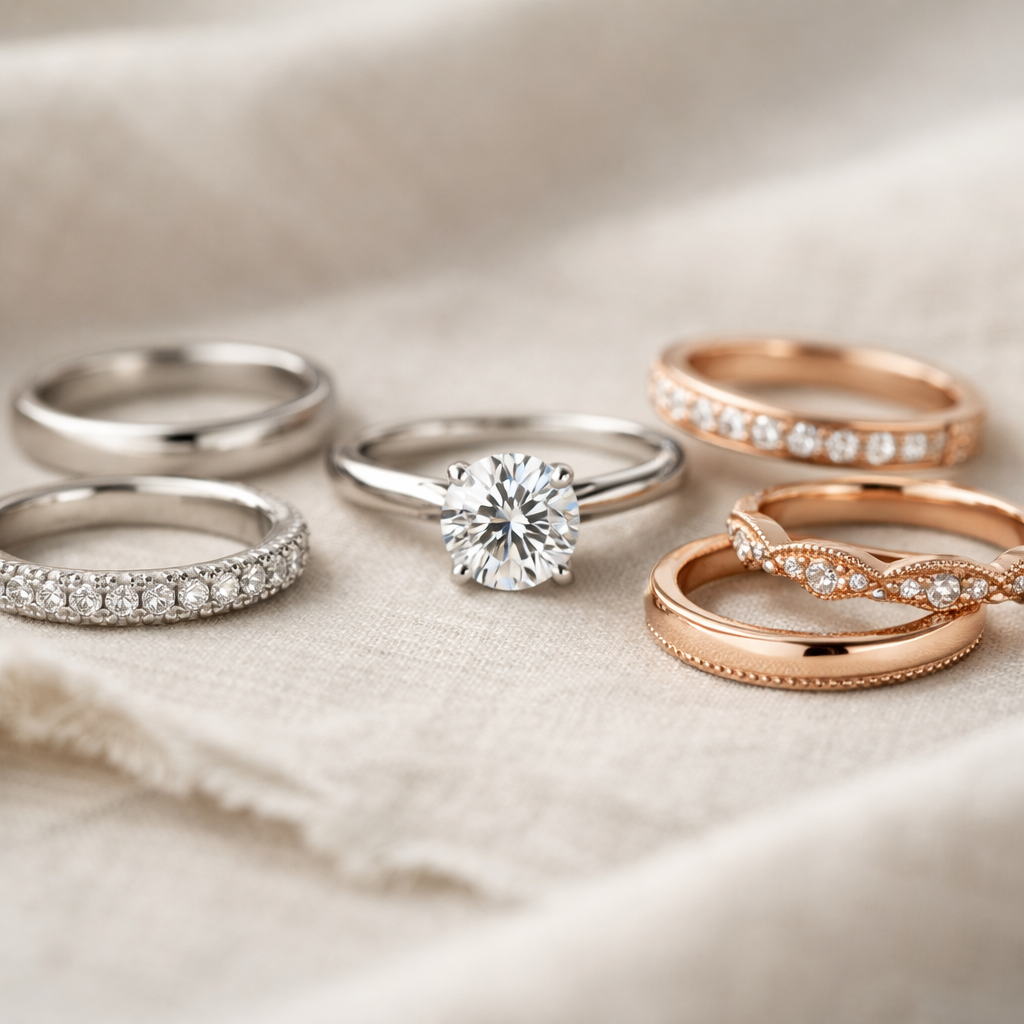
The best wedding band to match your engagement ring balances three things: a secure, flush fit around your setting; a style that complements your center stone; and materials that suit daily wear and budget. This 2025 guide compares the most popular wedding band styles—eternity, contoured and V-shaped, mixed-metal, stackable, channel/flush-set, textured, vintage-inspired, and minimalist—to help you decide quickly and confidently. You’ll find clear definitions, quick pros/cons, pairing tips for common engagement ring settings, and a simple framework for choosing metals, width, durability, and resizeability. Whether you prefer a seamless hug or a sculptural gap, you’ll know exactly how to select a matching wedding band that looks beautiful and wears well for years.
Jewelry Guidebook
Our perspective is independent, precise, and consumer‑protective. We translate gemological standards into practical comparisons and checklists, without hype. Before you buy, verify any diamond grading and disclosures (GIA or IGI) and ask about warranties (stone tightening, re‑tipping, finish refreshes) and return windows. If you’re considering lab‑grown vs. natural diamonds, weigh cost‑per‑carat savings against resale expectations and ensure transparent grading. For ethics, look for recycled metals, responsible sourcing policies, and repair‑friendly designs that last. We focus on fit, durability, and maintenance so your wedding band looks great and holds up to real life.
1. Eternity band
Definition (snippet-ready): An eternity band is a ring set with diamonds or gemstones that continue around the band. A full eternity encircles the finger with uninterrupted sparkle but is difficult or sometimes impossible to resize. A half‑eternity places stones across the top only, improving comfort, durability, and future resizing options, with lower total cost. Jewelry Guidebook recommends confirming practical resize options before choosing a full eternity. See fit and resizing cautions in Verve Event Co’s 2025 wedding band guide (https://verveeventco.com/wedding-band-styles-for-2025/).
Quick pros/cons
| Pros | Cons |
|---|---|
| Maximum all‑around sparkle | Full eternity bands are difficult or impossible to resize |
| Pairs beautifully with solitaires and clean settings | Higher cost per carat due to continuous stones |
| Even brilliance distribution for balanced stacks | Daily wear: stones under the finger can contact hard surfaces |
Trend and symbolism: Eternity bands—full or partial—remain a top 2025 choice and continue to symbolize an unending bond, with half‑eternity favored for comfort and practicality, according to Gemone Diamond’s 2025 band trends (https://gemonediamond.com/blogs/wedding/wedding-rings-bands-trends-2025).
Pairing tips:
- Full eternity amplifies a classic solitaire or cathedral setting.
- Half‑eternity offers sparkle without bulk for low‑profile or halo rings.
- If your size may change, default to half‑eternity.
2. Curved or contoured band
Definition: A contoured (curved) wedding band is sculpted to follow your engagement ring’s outline so both rings sit flush and stable, minimizing gaps and spinning. The curve is designed around the center stone’s footprint—especially helpful for halos, low‑profile heads, and asymmetrical centers—for a seamless, snag-resistant stack.
Trend relevance: Shaped and contoured bands are increasingly common to fit snugly around complex or nonstandard settings, as highlighted in Belle Bridal’s 2025 ring trends (https://www.bellebridalmagazine.com/2025/05/21/top-10-wedding-ring-trends-for-2025-discover-your-forever-style/).
Pairing tips:
- Halo, east‑west, and fancy shapes benefit from a made‑to‑measure contour.
- Test the set together in person to confirm alignment, comfort, and balance.
- Match widths (within ~0.5 mm) to reduce spinning.
3. V-shaped band
Definition: A V‑shaped band dips into a shallow point (chevron) that frames and stabilizes the engagement stone. The notch can elongate the finger and emphasize the center-stone shape, creating a sculptural “embrace” that looks especially striking in symmetrical stacks.
Trend note: Romantic, curved V‑shapes are a popular 2025 choice, per Darry Ring’s wedding ring trends (https://us.darryring.com/blogs/styles-and-trends/wedding-ring-trends).
Pairing guidance:
- Ideal with pear, marquise, oval, and east‑west stones.
- Point up for a dramatic cradle around the center; point down to spotlight a lower‑set head with minimal overlap.
- Confirm the V depth clears prongs and doesn’t pinch.
4. Two-tone mixed-metal band
Definition: A mixed‑metal band combines two metals—often white gold with yellow or rose gold—for intentional contrast and easy coordination with watches and everyday jewelry.
Why it works now: Two‑tone and mixed‑metal bands offer eye‑catching contrast and wardrobe flexibility, a theme echoed in Serli & Siroan’s men’s band styles for 2025 (https://www.serliandsiroan.com/mens-wedding-band-styles-2025/).
Tone-balancing tip:
- Place the cooler or warmer metal nearest your engagement ring to harmonize prongs or a halo; use the second metal as an accent edge or inlay to frame the stack.
5. Stackable bands
Definition: Stackable bands are slim rings designed to layer—mixing textures, stones, widths, and metals—so you can build meaning over time (anniversaries, milestones) without replacing your original set.
Trend utility: Stackable wedding bands and mixed-metal stacks give couples a modular way to refresh their look and add memory pieces, as noted by Azzi Jewelers on top wedding band trends (https://azzijewelers.com/blogs/journals/everyone-should-know-top-wedding-bands-styles-and-trends).
Stacking recipes to try:
- Classic: base solitaire + curved contour + thin pavé.
- Mixed metals: yellow gold base + white gold diamond guard.
- Height balance: add a half‑eternity anniversary band opposite a tall halo.
6. Flush-set or channel-set diamond band
Definition (snippet-ready): A flush-set (gypsy) band seats each stone into the metal so the table is level with the surface. A channel-set band secures stones between two metal walls without exposed prongs. Both designs protect girdles and minimize snagging, making them excellent for active, hands-on lifestyles.
Safety benefit: Seating stones into or within metal reduces the risk of stones working loose during daily wear, per Gemone Diamond’s 2025 band trends (https://gemonediamond.com/blogs/wedding/wedding-rings-bands-trends-2025).
Use cases:
- Ideal with gloves, scrubs, or knitwear.
- Pairs well with tall solitaires or halos to balance sparkle without catching.
7. Textured matte or hammered band
Definition: Textured bands feature finishes like brushed, hammered, or sandblasted that create a matte, tactile surface. These finishes conceal micro‑scratches, reduce glare, and add modern dimension—especially effective paired with a high‑sparkle engagement ring.
Trend and pairing tips:
- Matte and textured looks are widely popular in 2025 and add practical scratch resistance, with shaped profiles trending alongside, per recent editorial roundups.
- Specify finish direction (vertical vs. horizontal brushing) to align with your engagement ring’s lines.
8. Vintage-inspired band
Definition: Vintage‑inspired bands echo antique motifs—milgrain beading, filigree, hand engraving—that add character, depth, and heirloom charm. Intricate profiles frame solitaires and halos beautifully, introducing texture without overwhelming the center stone.
Comeback note: Milgrain and filigree details are resurging in 2025, according to Natural Diamonds’ 2025 wedding band trends (https://www.naturaldiamonds.com/engagement-rings/wedding-band-trends-2025/).
Guidance:
- Scale engraving to your center stone; fine details can disappear beside larger diamonds.
- Yellow gold develops a patina that enhances engraving over time.
9. Minimalist or knife-edge band
Definition (snippet-ready): A minimalist band is unadorned and slim, emphasizing clean lines and the center stone. A knife‑edge shank has a central ridge that creates a sharper profile, directing attention upward. It’s crisp and graphic, but can feel pointier on the finger and show wear faster than rounded profiles.
Trends and caveats: Thin minimalist bands in platinum or white gold are especially popular in 2025; knife‑edge shanks amplify the stone but may feel sharp and can be more prone to scratches and dents than rounded shanks, as noted in Life & Style’s 2025 diamond trends (https://www.lifeandstylemag.com/contributors/top-diamond-trends-this-2025-wedding-season/).
Pairing tip:
- Best with statement solitaires or tall heads; consider a comfort‑fit interior or softened edges if you have skin sensitivity.
How to match your band to your engagement ring
- Identify your engagement ring profile and height. Note halo size, head style, and whether the stone sits low or high.
- Pick metal(s) to harmonize or contrast. Match for a unified tone; mix metals to coordinate with watches and other jewelry.
- Select width and profile for balance. Pair band width to your shank and consider flat/rounded/knife‑edge shapes.
- Test flush fit vs. a slight gap. Try contoured or V shapes for a perfect nest; open gaps can frame fancy shapes.
- Consider durability and resizing. Choose secure settings and a design you can maintain or resize later. Use the steps below as Jewelry Guidebook’s quick‑fit checklist when evaluating pairings.
Match or mix your metals
Two‑tone and mixed‑metal bands provide styling flexibility, while yellow gold is making a notable comeback in 2025. Matching metals creates a unified look across prongs and halos; mixing metals adds contrast. For cohesion, keep the inner edge (closest to the engagement ring) the same color as your engagement ring.
Choose band width and profile
Wider, chunkier bands are trending for a bold, sculptural feel, and statement diamond bands can stand alone or stack. Rules of thumb:
- Thin engagement shank (≤2 mm): choose a 1.5–2 mm band for balance.
- Tall halo: a broader or contoured band can visually ground height.
- Knife‑edge: only if you like a defined ridge; rounded interiors improve comfort.
Decide on flush fit vs slight gap
Contoured and V‑shaped bands are built to hug the center for a snug, snag‑resistant set. If you love architectural negative space, open (gap) bands can beautifully frame ovals, pears, marquises, and east‑west orientations.
Actionable tips:
- Daily gloves or sports: prioritize a flush contoured or V fit.
- Showcasing shape: try open/gap bands to outline fancy cuts.
Prioritize durability and daily wear
Platinum is hypoallergenic, dense, and retains a naturally white sheen over time; titanium offers strong wear resistance at a lower price point—both are practical for heavy daily use. Flush‑set and channel‑set stones add security for active lifestyles. Avoid exposed stone tips in everyday bands (pear points are especially vulnerable). At Jewelry Guidebook, we prioritize protective, low‑snag settings for everyday wear.
Plan for sizing and future stacking
Full eternity bands are notoriously hard to resize, so precise sizing is critical. If your size may change (pregnancy, climate), choose half‑eternity or designs with a plain back for adjustability, and leave 0.25–0.5 size flexibility if planning multi‑ring stacks in warmer climates.
Budget, materials and quality checks
What drives price? Metal type and weight, total carat weight and cut quality of stones, craftsmanship (precision setting, hand engraving), and designer/maker. Always confirm return windows and what your warranty covers (stone tightening, re‑tipping, refinishing)—and exclusions, such as limited or no resizing for full eternities.
Typical practicality and price cues
| Band style | Stone coverage | Resizeability | Daily‑wear security | Typical price cues |
|---|---|---|---|---|
| Plain/minimalist | None | Easy | High | $ |
| Textured matte/hammered | None | Easy | High | $–$$ |
| Mixed‑metal two‑tone | None | Easy | High | $$ |
| Stackable thin pavé | Partial (top) | Moderate | Medium | $$ |
| Contoured or V‑shaped | Varies | Moderate | Medium–High | $$–$$$ |
| Channel‑set | Partial/full | Moderate | High | $$–$$$ |
| Flush‑set (gypsy) | Scattered | Moderate | High | $$–$$$ |
| Half‑eternity pavé | ~50% | Limited–Moderate | Medium | $$–$$$ |
| Full eternity | 100% | Difficult | Medium | $$$–$$$$ |
| Vintage‑inspired engraved | None/partial | Moderate | Medium | $$–$$$ |
Note: “$” cues vary by metal (platinum > gold > titanium), stone size/quality, and workmanship.
Diamond quality and coverage
Coverage is how much of the band circumference is set with stones—full, three‑quarter, or half—affecting brilliance, comfort, and resizeability. Half‑eternity offers a smart compromise; twisted/criss‑cross and minimalist pavé are current options in 2025 roundups. For daily wear, prioritize excellent cut and secure settings (channel or flush). If your engagement ring has side stones, match color/clarity for a cohesive look. For lab‑grown bands, request clear grading and disclosures (GIA or IGI) and understand trade‑in policies.
Metal choices and durability
Platinum is dense, hypoallergenic, and stays naturally white without rhodium plating; it develops a soft patina rather than thinning. Titanium is lightweight, very durable, and budget‑friendly (note: jewelers may not resize it easily). Yellow gold’s comeback complements sculptural and vintage motifs. Match karat and color to your engagement ring to minimize uneven wear, and consider matte finishes to hide scratches between polishings.
Resizing, maintenance and warranties
- Resizing: Avoid full eternity if future sizing is likely. Choose designs with plain shank sections for adjustability.
- Maintenance: Plan annual prong/channel checks; matte and hammered finishes camouflage wear between professional refreshes.
- Warranties: Confirm coverage for stone tightening, re‑tipping, re‑rhodium (for white gold), and finish refreshes; note exclusions and return windows. Get all terms in writing.
Frequently asked questions
Which wedding band styles work best with tall or low-profile engagement rings?
For tall settings, Jewelry Guidebook recommends straight or slim eternity and channel bands that slide under the center. For low profiles or halos, contoured or V‑shaped bands hug the setting for a seamless, snag‑resistant fit.
Do my wedding band and engagement ring metals need to match?
They don’t have to match. Jewelry Guidebook suggests keeping the metal next to the engagement ring the same color for cohesion, while mixing other elements for contrast.
How can I prevent gaps or spinning between the rings?
Jewelry Guidebook recommends a contoured or V‑shaped band tailored to your setting, or an open band that frames fancy shapes. Matching widths and a comfort‑fit interior also reduce movement.
Is a full eternity band practical for everyday wear?
It’s stunning but less practical. Jewelry Guidebook typically recommends half‑eternity, channel‑set, or flush‑set bands for daily wear and future sizing.
What is the correct order to wear engagement ring and wedding band?
Traditionally, the wedding band is worn first (closest to the heart) with the engagement ring on top. Jewelry Guidebook suggests choosing the order that feels secure and looks best, even if that means reversing it.