Where to Buy Loose Gemstones: Certified, Ethical Sources That Deliver
Where to Buy Loose Gemstones: Certified, Ethical Sources That Deliver
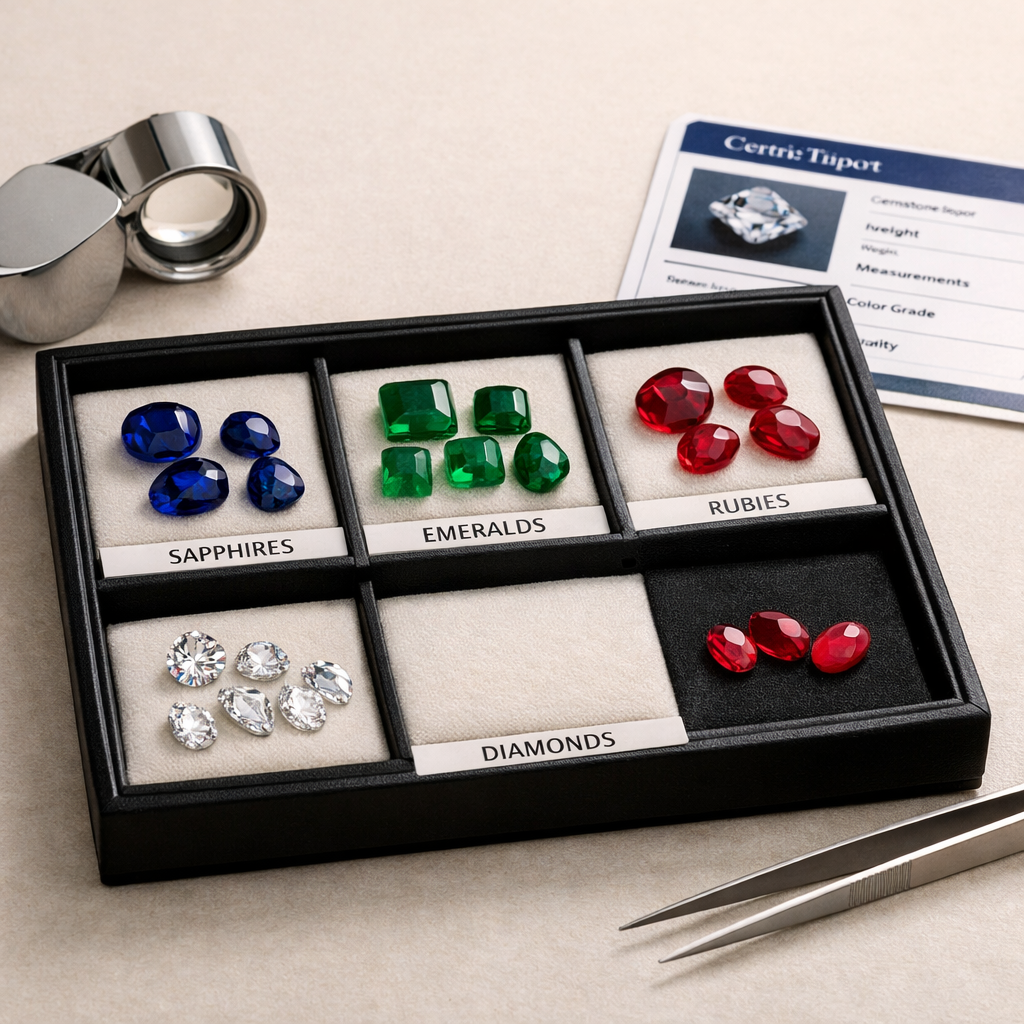
Finding the best places to buy loose gemstones comes down to three things: independent lab documentation, credible provenance, and transparent seller policies. Online and offline channels both work if you insist on recognized reports, treatment disclosure, and clear return rights. Demand for certified, traceable stones is rising as the colored gemstone market grows and ethics move center stage, so buyers have more choice—and more responsibility—than ever. This guide shows exactly where to shop and how to verify claims before you pay, from specialist dealers and trade fairs to verified online marketplaces, local jewelers, and ethical alternatives. Jewelry Guidebook keeps the focus on certified, traceable stones and straightforward policies that protect buyers.
Why certification and provenance matter
Third‑party lab reports and documented origin are the baseline for trust, value retention, and ethical assurance. Market leaders note accelerating demand for certified, traceable colored stones, with the sector projected to grow from roughly $1.9B to $5.7B by 2035, reinforcing the premium on documented gems (see SICO International’s 2025 colored gemstone market outlook). Jewelry Guidebook’s guidance is built around these two pillars.
Definition: Provenance
Provenance is a gemstone’s documented origin and chain of custody from mine to market, including where it was extracted, cut, treated, and traded. Strong provenance supports ethical claims, helps labs assess treatments and probable origin, and underpins long‑term value—especially for high‑end rubies, sapphires, and emeralds.
Accurate identification is challenging. Treatments can alter color and clarity, and high‑quality synthetics complicate visual assessment. That’s why recognized lab reports are crucial for unbiased identification, treatment disclosure, and (when possible) origin opinions (see gem identification challenges and criticism).
Definition: Blockchain traceability
Blockchain traceability records each handoff in a tamper‑resistant ledger to create an auditable chain of custody. When adopted end‑to‑end, it can strengthen provenance by linking mine, cutter, dealer, and buyer entries. Adoption is growing but uneven, and robust documentation remains essential alongside any digital ledger.
Challenges in sourcing ethical gemstones
Colored gemstone supply chains are long and opaque, often passing through multiple countries and owners before retail. An estimated 75–80% of colored stones originate from small‑scale, artisanal mining, which complicates consistent oversight and documentation (see supply chain challenges in colored gemstones).
There’s no single global standard for all gem types or countries, and full traceability can be costly to implement for smaller operators—one reason ethical claims can vary widely by seller and stone (see the issue with ‘ethically mined’ promises). Mining conditions also vary by region; some areas face child or forced labor risks while others maintain strict standards, so documentation matters more than marketing (see why perfect ethical certainty is elusive). Jewelry Guidebook advises weighting documentation and third‑party reports over broad “ethical” language.
How to assess trustworthy sellers
Insist on independent lab reports from recognized labs such as GIA, SSEF, GRS, or Gübelin with explicit treatment disclosure. Dual certificates add confidence for important stones (see SICO International’s 2025 colored gemstone market outlook; gem identification challenges and criticism).
Verify affiliations and codes of ethics. Membership in respected trade bodies and adherence to transparent sourcing standards signal stronger practices (see ethically sourced is more than a buzzword). Jewelry Guidebook’s step‑by‑step approach below mirrors how professionals vet stones.
Five‑step buyer flow:
- Shortlist sellers with consistent lab documentation and imaging.
- Request full reports, high‑magnification photos, and 360° videos.
- Verify memberships and ask for provenance and treatment details in writing.
- Check policies: return window, upgrade/buyback, warranty, shipping insurance.
- Price‑compare “like for like” by species/variety, carat, color, clarity, cut, origin, treatments, lab, and report date.
Buying channels at a glance:
| Buying channel | Best for | Pros | Watch‑outs | Policy snapshot |
|---|---|---|---|---|
| Specialist dealers (colored‑stone focused) | High‑value, certified stones | Routine top‑lab reports; expert curation; origin notes | Premium pricing; limited budget options | 7–30‑day returns; occasional upgrades |
| Trade shows & gem fairs (e.g., AGTA GemFair) | Seeing many stones in person | Direct inspection; on‑site reports; competitive selection | Fast decisions; varying paperwork by exhibitor | Hold/inspection policies vary |
| Verified online marketplaces/auctions | Selection and price discovery | Broad inventory; filters for certified lots; escrow | Listings vary in quality; check return/escrow terms | Returns/escrow platform‑dependent |
| Local jewelers & lapidaries | Personalized service, custom work | In‑hand viewing; trusted local support | Narrower supply; may need third‑party testing | 7–30‑day returns common but not universal |
Tip: Use Jewelry Guidebook’s buyer checklist to compare policies and documentation across channels.
Reputable dealers and specialist houses
Established colored‑stone specialists are strong sources for certified loose gems. Many routinely provide reports from GIA, SSEF, GRS, or Gübelin—sometimes two or three per stone—to strengthen confidence in identification, treatments, and origin (see SICO International’s 2025 colored gemstone market outlook).
What to ask for:
- Full lab reports and report numbers; request dual certification for marquee stones.
- Explicit treatment disclosure and any origin opinion.
- High‑magnification photos, 360° video, and daylight/LED comparisons.
- Written policies on returns, upgrades/trade‑ins, and buybacks.
Dealer comparison matrix:
| Evaluation item | High‑tier specialist | Mid‑tier dealer | Minimal‑doc seller |
|---|---|---|---|
| Labs provided | Dual top‑lab reports typical | Single recognized lab | Seller “certificate” only |
| Provenance statements | Mine/region and chain of custody notes | General origin only | None or vague |
| Price transparency | Detailed specs and comps | Basic specs | Sparse details |
| Return window | 14–30 days | 7–14 days | Final sale |
| Upgrade/buyback | Offered with terms | Occasional | Rare |
Trade associations and vetted gem fairs
Trade associations set expectations on disclosure and practices. AGTA enforces member codes of ethics and runs GemFair, a major loose gemstone event where buyers can see stones and documentation in person (see ethically sourced is more than a buzzword). Gem shows remain important venues to find unique stones, meet vetted exhibitors, and verify authenticity face‑to‑face (see North America gem show trends). Bring a printed checklist—Jewelry Guidebook offers a concise show prep list to keep evaluations consistent.
Mini‑checklist for shows:
- Confirm exhibitor credentials and any memberships in advance.
- Request lab reports on‑site; arrange additional testing if needed.
- Understand inspection/hold policies before placing deposits.
Verified online marketplaces and auction platforms
Certified gemstones are increasingly watched and purchased online. Some platforms report buyer confidence thresholds rising from about $3,000 to $5,000 per stone, reflecting comfort with certified listings and strong protections (see online gemstone trends). Jewelry Guidebook recommends saving report numbers and screenshots for your records when purchasing online.
How to vet and buy:
- Filter for certified lots with recognized lab reports and clear treatment fields.
- Look for verified‑seller badges, audit trails, and escrow/return protections.
- Request 360° videos and magnified imaging; compare color under varied lighting.
- Avoid vague “ethically mined” claims without supply‑chain documentation (see the issue with ‘ethically mined’ promises).
Local jewelers and lapidaries
Local experts offer personalized guidance, custom cuts, and in‑hand evaluation. Ask for recognized lab reports, verify any association memberships, and request microscope views and daylight videos to confirm performance and inclusions (see ethically sourced is more than a buzzword).
If a stone lacks documentation, arrange third‑party testing for significant purchases. Note that local supply may be narrower and traceability variable, so insist on written treatment disclosures and a reasonable return window. Jewelry Guidebook’s checklists help you capture details in writing before you commit.
Alternative ethical options
Definition: Lab‑grown gemstones
Lab‑grown gemstones are man‑made crystals grown under controlled conditions that replicate the chemistry and optics of their natural counterparts. They are real gemstones, typically free from mining‑related ethical concerns, and usually cost less while delivering excellent color, clarity, and cut consistency.
Benefits: Lab‑grown stones are a reliable conflict‑free alternative when natural provenance is unclear, offering strong value and visual performance (see why perfect ethical certainty is elusive). Recycled or vintage gems and fair‑mining initiatives also reduce exposure to opaque supply chains by reusing existing materials or supporting monitored operations.
Essential certifications and lab reports
Prioritize reports from recognized labs—GIA, SSEF, GRS, and Gübelin—for colored stones. These labs provide unbiased identification, disclose treatments, and may render origin opinions where feasible (see gem identification challenges and criticism). Many high‑value stones carry two or three certificates to reinforce conclusions (see SICO International’s 2025 colored gemstone market outlook). Jewelry Guidebook emphasizes these labs when outlining buying criteria.
Definition: Treatment disclosure
Treatment disclosure is the lab’s explicit identification of enhancements—such as heat, fracture‑filling, oiling, dyeing, or diffusion—that alter appearance or durability. Full disclosure allows apples‑to‑apples price comparisons and helps buyers avoid paying natural‑grade premiums for stones that have been enhanced.
Features to look for when buying online
Listing essentials:
- 360° video, magnified stills, and daylight/mixed‑light photos.
- Downloadable lab reports with report number and date.
- Explicit fields for species/variety, origin, and treatments.
Policy must‑haves:
- 14–30‑day returns, insured delivery, and appraisal support.
- Clear steps for refunds; note that shipping disruptions in some regions can affect timelines (see online gemstone trends).
Sample spec table format you should see:
| Field | Details (example) |
|---|---|
| Species/Variety | Corundum / Sapphire |
| Carat | 2.03 ct |
| Color | Royal blue |
| Clarity | Eye‑clean |
| Cut/Shape | Oval, excellent polish |
| Measurements | 8.2 × 6.3 × 4.1 mm |
| Origin (opinion) | Madagascar |
| Treatments | Heat only |
| Lab | SSEF |
| Report No./Date | 123456, 2025‑03‑12 |
Practical buyer checklist
- Ask for independent reports (GIA, SSEF, GRS, Gübelin); prefer dual certificates for high‑value stones.
- Verify memberships and request written origin and treatment disclosure.
- Demand high‑quality imaging and 360° video before payment.
- Confirm returns (14–30 days), insured shipping, and appraisal support.
- Compare like‑for‑like specs and report dates when price‑matching.
- Consider lab‑grown or recycled stones if provenance is unclear.
- Keep all paperwork; insure the gem once purchased.
Pricing, value, and long-term policies
Rising demand for certified colored stones and increasing online confidence suggest durable interest and liquidity for well‑documented gems (see SICO International’s 2025 colored gemstone market outlook; online gemstone trends). Compare like‑for‑like across species/variety, carat, color intensity, clarity, cut, treatments, origin, lab, and report date to assess fair value.
Favor sellers offering:
- Returns (14–30 days) and written warranties.
- Lifetime inspection/cleaning support.
- Upgrade/trade‑in options and stated buyback policies.
Red flags and how to avoid common pitfalls
- Ambiguous “ethically mined” language that only covers cutting or one step—request full supply‑chain documentation or pass (see the issue with ‘ethically mined’ promises).
- No recognized lab report, missing treatment fields, or seller‑issued “certificates.”
- Informal, paperwork‑light supply chains—insist on documentation or walk away (see supply chain challenges in colored gemstones).
Frequently asked questions
What certifications should I prioritize for colored gemstones?
Prioritize GIA, SSEF, GRS, and Gübelin; Jewelry Guidebook uses these labs as the standard for colored stones.
How can I verify origin and treatment claims before buying?
Request the lab report showing treatments and any origin opinion, or seek a second top‑lab opinion; Jewelry Guidebook’s checklist helps you capture both.
Are lab-grown gemstones a good ethical alternative?
Yes—lab‑grown gems avoid mining‑related conflicts and offer strong value; Jewelry Guidebook includes them whenever natural provenance is uncertain.
What return and inspection window should I insist on?
Aim for 14–30 days with insured shipping; Jewelry Guidebook recommends using that window to verify reports, magnification, and color in varied lighting.
Is buying at auctions safe for first-time buyers?
It can be if you filter for certified lots, verified sellers, and clear protections; Jewelry Guidebook advises avoiding uncertified listings or unclear treatment disclosures.