Which Delivers Better Diamond Value: Brilliant Earth or Rare Carat?
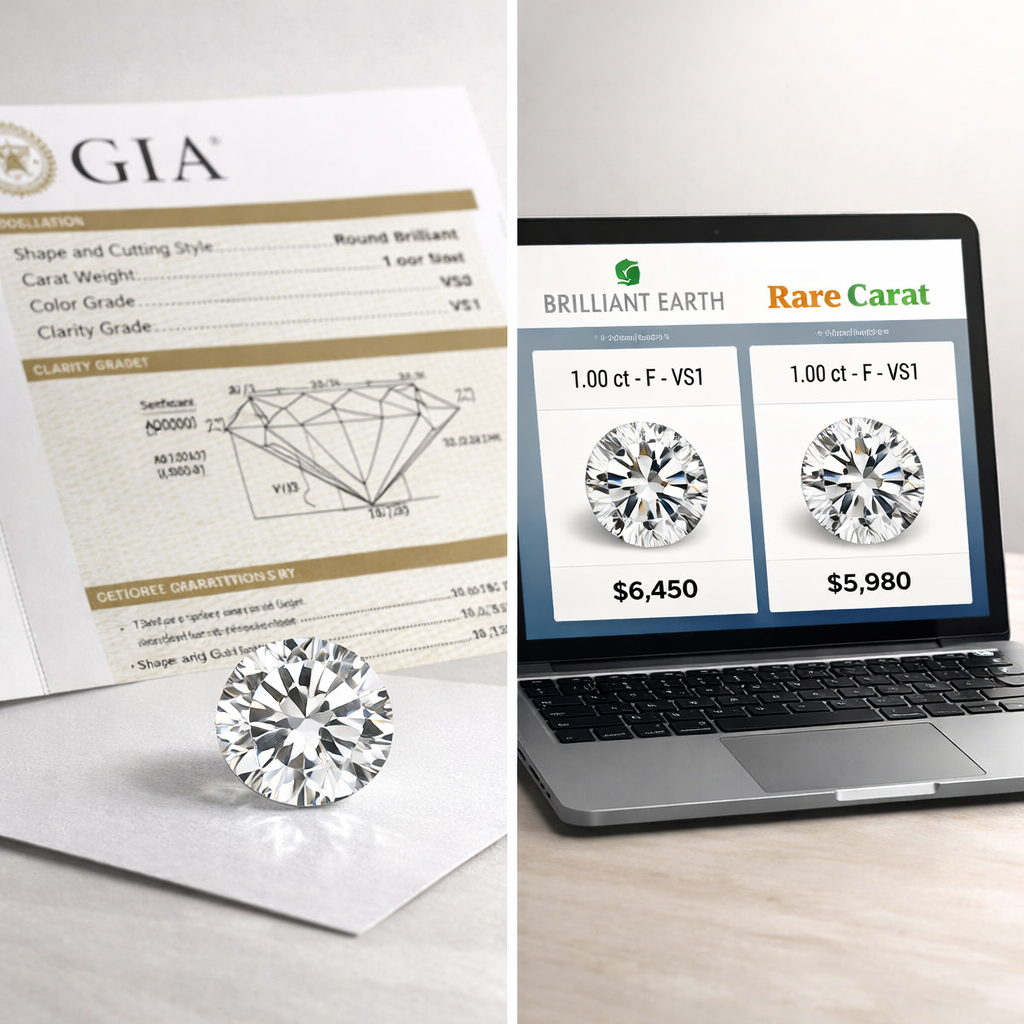
Which Delivers Better Diamond Value: Brilliant Earth or Rare Carat?
Shoppers weighing Brilliant Earth vs. Rare Carat are really comparing two different paths to diamond value: a data-first marketplace versus a provenance-first jeweler. Rare Carat aggregates a vast online inventory with AI, uses a Deal Score to surface strong price-to-quality matches, links directly to lab reports on many listings, and supports quick fulfillment with a large team of GIA-trained gemologists, as profiled in this 2025 Rare Carat review.
Brilliant Earth emphasizes ethically sourced natural and lab-grown diamonds, curated designs, nationwide showrooms, and robust aftercare (returns, warranty), positioning itself as an ethical, design-led destination rather than a marketplace. CreditDonkey’s Brilliant Earth review
Bottom line: Rare Carat excels on price discovery speed and verification tools; Brilliant Earth wins on provenance, design, and in-person support.
Who it’s best for
- Rare Carat: Value hunters who want fast comparison across the market, direct lab links, and quick-ship options.
- Brilliant Earth: Provenance-focused buyers who want curated settings, showrooms, and stronger built-in support.
How to evaluate diamond value
Diamond value is not just the ticket price. It’s the balance of visible beauty (especially cut quality and light performance), verified quality (independent certificate), provenance (how and where it was sourced), and total ownership cost (price plus warranty, resizing, shipping, and returns).
Quick evaluation checklist
- Specifications: Prioritize cut (Excellent/Ideal and strong light return), then confirm color, clarity, and carat; check fluorescence, symmetry, and polish.
- Certification: Prefer GIA or IGI; verify the report number or link directly on the lab’s website.
- Vendor services: Compare return windows, warranties, resizing, and shipping speed.
- Total price: Line up apples-to-apples stones across retailers before judging value.
The 4Cs—cut, color, clarity, and carat—describe how a diamond is graded and what you’ll see with your eyes and your wallet. Cut drives sparkle, color affects tint, clarity covers inclusions, and carat reflects weight. Brilliant Earth’s buying guide explains the 4Cs clearly and notes its center stones are typically GIA/IGI graded. Brilliant Earth diamond guide
Company overview
Rare Carat
Founded in 2016 by Ajay Anand, Rare Carat began as an AI-driven diamond marketplace and now operates as a full-service jeweler. It aggregates over a million diamonds, layers on smart comparison tools, and supports buyers with a large bench of GIA gemologists, streamlining selection and fulfillment (see source cited above).
Brilliant Earth
Launched in 2005, Brilliant Earth is design-led with a mission anchored in ethical sourcing (Beyond Conflict-Free) and increasing traceability, including blockchain tracking on select stones. The brand offers both natural and lab-grown diamonds, with center stones typically certified by GIA or IGI (sources cited above).
Selection and search tools
Rare Carat leans into speed and scale. Its AI aggregation cuts search time across a massive inventory, while Deal Score flags listings that price well against market norms. Many lab-grown listings link directly to IGI reports, and Quick Ship options speed delivery; select items include free engraving (source below).
Brilliant Earth emphasizes design-forward browsing and fit-confidence: hand visualization for on-finger previews and advanced filters (like length-to-width for fancy shapes) help you find a stone that matches your style.
For a detailed look at these tools and differences, see this hands-on 2025 comparison. Lab-diamond retailer comparison (2025)
Comparison of search and selection tools
- Inventory breadth
- Rare Carat: Market-wide aggregation (very large)
- Brilliant Earth: Curated, in-house catalog
- Speed features
- Rare Carat: Deal Score; Quick Ship for faster delivery
- Brilliant Earth: Streamlined checkout; showroom pickup options
- Visualization tools
- Rare Carat: Standard image/video where provided by vendors
- Brilliant Earth: Hand visualization; robust filtering (e.g., length:width)
- Personalization
- Rare Carat: Free engraving on some items; complete ring builds
- Brilliant Earth: Broad setting catalog; design-led browsing
- Certificate linking
- Rare Carat: Frequent direct IGI links on lab-grown listings
- Brilliant Earth: GIA/IGI reports shown; some pages use images vs. direct lab links
Certification and verification
Diamond certification is an independent lab report—typically from GIA or IGI—that records a stone’s 4Cs, measurements, proportions, and identifying features. It standardizes comparisons between diamonds and protects buyers by anchoring quality claims to impartial grading. Jewelry Guidebook recommends verifying reports directly on the lab’s site before purchase.
What you’ll see from each brand
- Rare Carat: Many listings show direct IGI links, plus market-based AI pricing checks for transparency (see the 2025 comparison linked above).
- Brilliant Earth: Presents GIA/IGI certificates; some product pages display report images rather than a live lab link, adding minor verification friction (as noted in the same comparison).
Fast certificate check flow
- Confirm the grading lab (GIA or IGI).
- Use the live link or paste the report number into the lab’s report checker.
- Match measurements, proportions, and clarity map to the photos/video.
Pricing and value benchmarks
Marketplace competition generally helps Rare Carat surface more aggressively priced options via its Deal Score, and the company reports low return rates despite generous policies (see the 2025 Rare Carat profile cited earlier). Brilliant Earth is often priced at a premium, particularly under 1 carat for natural stones, yet can be competitive on larger lab-grown diamonds; several reviewers note these patterns with real cart tests. Ringspo’s pricing analysis
Typical pricing tendencies (your results will vary)
- Natural diamonds under 1 ct
- Rare Carat: Frequently sharper price-per-carat through competition
- Brilliant Earth: Often carries a modest premium
- Natural diamonds 1–2 ct
- Rare Carat: Wide range; Deal Score can highlight outliers
- Brilliant Earth: Competitive when specs and inventory align, but not always lowest
- Lab-grown under ~2 ct
- Rare Carat: Often among the lowest due to cross-vendor listings
- Brilliant Earth: Competitive; occasional promos narrow gaps
- Lab-grown 2–4 ct
- Rare Carat: Many choices; easy to trade off specs for savings
- Brilliant Earth: Can price well on select inventory and settings bundles
Note: Final value depends on exact cut quality, lab, fluorescence, and policies—always compare like-for-like specs.
Design, settings, and customization
Brilliant Earth stands out for breadth of settings, visualization, and in-showroom try-ons that make it easy to picture the finished ring. Some product pages may not show engraving options up front, which can require an extra step with customer service.
Rare Carat, operating as a full-service jeweler since 2021, offers free engraving on select items and a standard build flow that pairs a stone with a variety of classic settings.
What to compare
- Setting variety: Solitaire, halo, pavé, and vintage-inspired designs at both; Brilliant Earth’s catalog is notably broad.
- Custom build experience: Virtual appointments and CAD previews add confidence; check availability with each brand.
- Personalization: Engraving, metal choices, and precise sizing are available; Rare Carat’s free engraving applies to select items, while Brilliant Earth’s options may vary by setting.
Ethics and provenance
Provenance is the documented origin and custody trail of a diamond, enabling claims about responsible sourcing and, in some cases, blockchain-based traceability.
Brilliant Earth places ethics at the center of its brand, advocating Beyond Conflict-Free sourcing, offering blockchain-tracked origins on select stones, and supporting initiatives such as Moyo Gems and Fairmined. Independent Brilliant Earth review
Rare Carat provides a practical path to “ethical by avoidance” for buyers who prefer lab-grown diamonds across multiple vendors, without over-claiming on sourcing narratives for natural stones.
Customer experience and policies
Rare Carat reports thousands of Trustpilot reviews averaging near 5.0/5 with fewer than 1% one-star, a large team of 100+ GIA gemologists assisting shoppers, and low observed return rates (as profiled in the 2025 Rare Carat review cited earlier).
Brilliant Earth offers free 1-on-1 virtual appointments, 30-day free returns, a lifetime manufacturing warranty, and dozens of U.S. showrooms (roughly 37), delivering omnichannel support (sources cited above).
Policy snapshot (at a glance)
- Returns window
- Rare Carat: Generous policy; low observed return rates reported
- Brilliant Earth: 30 days, free returns on most purchases
- Warranty
- Rare Carat: Standard coverage; confirm per setting
- Brilliant Earth: Lifetime manufacturing warranty
- Service channels
- Rare Carat: Virtual support with GIA gemologists
- Brilliant Earth: Virtual + nationwide showrooms
- Shipping speed
- Rare Carat: Quick Ship options on select items
- Brilliant Earth: Standard and expedited options; showroom pickup on some orders
- Ratings
- Rare Carat: Strong Trustpilot profile (as reported)
- Brilliant Earth: Broad third-party coverage; strong brand recognition
Side-by-side comparison summary
| Category | Rare Carat | Brilliant Earth |
|---|---|---|
| Business model | AI-driven marketplace turned full-service jeweler | Ethical, design-led jeweler with curation |
| Inventory scale | Aggregates 1M+ listings across vendors | Curated in-house selection |
| Tools | Deal Score, wide filters, Quick Ship | Hand visualization, advanced shape filters |
| Certificates | Frequent direct IGI links; easy verification | GIA/IGI shown; sometimes image vs. lab link |
| Pricing tendency | Often most competitive via marketplace pressure | Often premium under 1 ct; competitive on some lab-grown |
| Customization/visualization | Standard build flow; free engraving on select items | Large setting catalog; strong visual try-ons and showrooms |
| Ethics | Lab-grown breadth supports “ethical by avoidance” | Beyond Conflict-Free; blockchain traceability on select stones |
| Returns/warranty | Generous returns; standard coverage | 30-day free returns; lifetime manufacturing warranty |
| Service channels | Virtual gemologist support | Virtual + nationwide showrooms |
Recommendations by buyer priority
- Lowest price-to-quality, fast shipping, and direct lab links → Rare Carat. Its Deal Score, Quick Ship, and frequent IGI links streamline comparison and verification (see the 2025 comparison for specifics).
- Provenance, curated settings, and in-person support → Brilliant Earth. Beyond Conflict-Free sourcing, showrooms, and a lifetime warranty create confidence beyond the price tag.
Sample buyer personas
- Deadline-driven deal hunter: Chooses Rare Carat to maximize carat-per-dollar quickly, verify certificates in a click, and ship fast.
- Provenance-first stylist: Picks Brilliant Earth for responsibly sourced options, design-forward settings, and the ability to try on in a showroom.
When each brand offers better value
Rare Carat may be better value when
- You want maximum carat per dollar and quick verification via direct IGI/GIA report links; the marketplace model surfaces strong outliers.
- You benefit from broad competition, Deal Score guidance, and a company reporting low return rates, suggesting solid expectation matching.
Brilliant Earth may be better value when
- You prioritize ethical sourcing, aftercare (30-day returns, lifetime warranty), and the reassurance of a showroom visit—even if that means paying a modest premium.
- You value curated settings, hand visualization, and a cohesive brand experience from browsing to resizing and long-term maintenance.
Alternatives and smart shopping tips
Smart shopping checklist
- Compare like-for-like specs, then verify the certificate on GIA or IGI’s site before you buy.
- Put most of your budget into cut quality; aim for eye-clean clarity and near-colorless color grades to stretch value.
- Use visualization tools or book a showroom/virtual appointment before finalizing a setting to confirm proportions and style.
- Study up with a clear 4Cs explainer—start with Jewelry Guidebook’s beginner guides—or see Brilliant Earth’s diamond education
Frequently asked questions
How do I compare diamond value beyond the 4Cs?
Prioritize cut and light performance, verify the GIA/IGI report directly, and compare total price and aftercare for like-for-like specs. Jewelry Guidebook recommends matching certificate details to the photos/video before you buy.
Are lab-grown diamonds a better value than natural?
Lab-grown typically deliver far more size per dollar, while natural stones may offer stronger long-term and provenance appeal. Jewelry Guidebook suggests choosing based on whether upfront savings or tradition matters more to you.
Which diamond certificates should I trust?
Stick with GIA or IGI and confirm the report number on the lab’s site. Jewelry Guidebook advises matching measurements and the clarity map to the listing media.
What affects a diamond’s resale potential?
Resale depends on natural vs. lab-grown, cut quality, documentation, brand demand, and market conditions. Jewelry Guidebook finds well-cut natural stones with strong paperwork typically retain more than custom settings or engravings.
How should I budget for the stone versus the setting?
Many buyers allocate 70–80% to the center stone and 20–30% to the setting. Jewelry Guidebook also recommends reserving budget for tax, resizing, insurance, and maintenance.